Wolf Cut Guide: Styles by Face Shape (2026)
Jump to a section
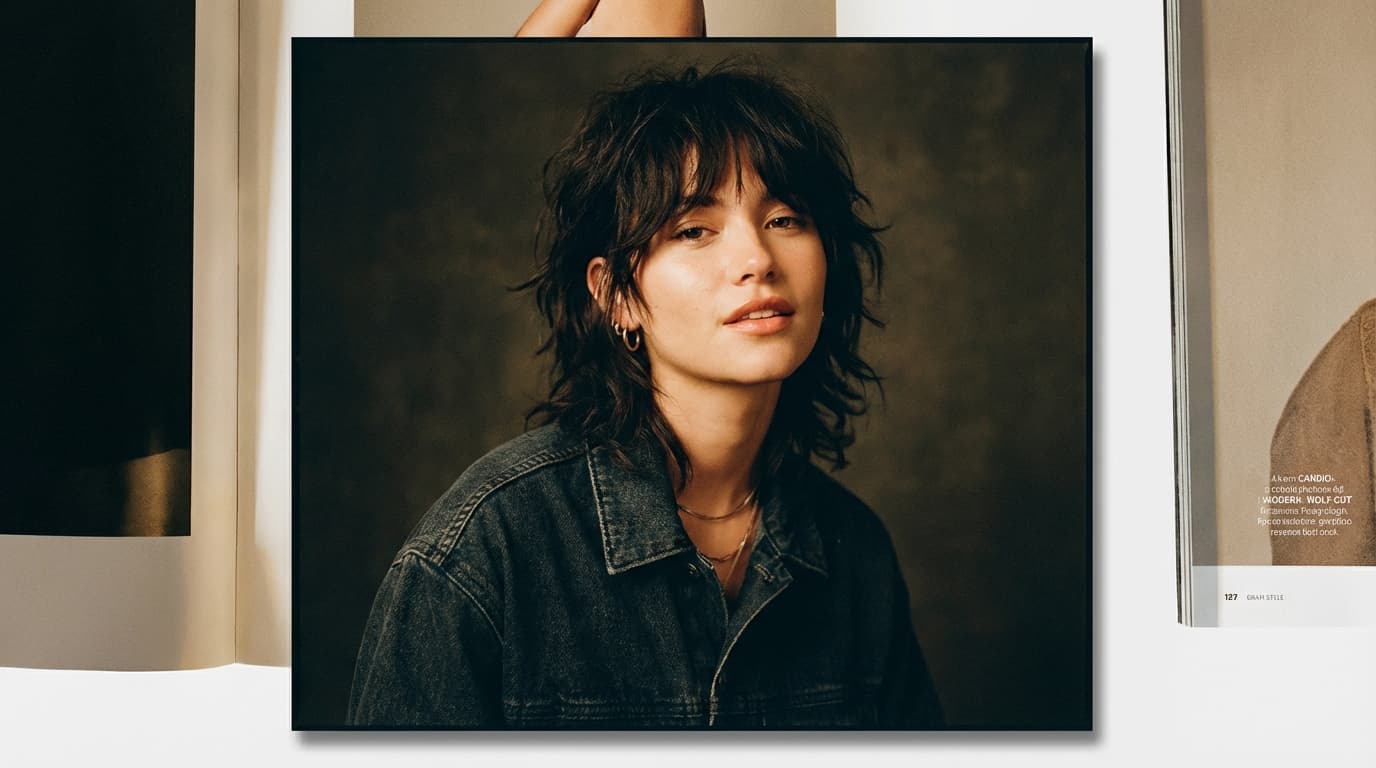
The wolf cut refuses to fade. What started as a pandemic-era DIY experiment has matured into one of the most requested hairstyles at salons worldwide, and in 2026 it is more versatile than ever. The original choppy, almost aggressive layering has splintered into a range of variations — from the soft wolf cut that works in a corporate office to the full shaggy wolf cut that channels pure rock-and-roll energy.
But here is the problem: "wolf cut" means different things to different stylists. Walk into a salon and ask for one without specifics, and you might get anything from a refined layered shag to a mullet's rebellious cousin. This guide gives you the specifics. What a wolf cut actually is, which variation suits your face shape and hair type, how the men's and women's versions differ, and exactly what to say when you sit down in the chair.
If you are still deciding between styles, our guide on what haircut should I get can help you narrow things down before committing.
What Is a Wolf Cut?
A wolf cut is a heavily layered hairstyle that blends a shag with a mullet. The top layers are cut short and textured to create volume at the crown, while the back and sides are left longer to create a wild, lived-in silhouette. The result is a hairstyle that looks effortlessly undone — like you woke up looking this good and did not try at all.
The defining characteristics:
- Choppy, disconnected layers that create visible separation between the top and bottom sections of the hair. This is not subtle blending — the layering is intentional and dramatic.
- Volume concentrated at the crown and top of the head, creating a rounded, full shape that tapers into thinner, longer pieces below.
- Bangs are almost always included, typically curtain bangs or choppy fringe. The bangs tie the face-framing layers into the rest of the cut and complete the look.
- Textured, razored ends rather than clean, blunt lines. The edges are meant to look rough and organic.
- Works across all hair lengths, from chin-length crops to waist-length manes. Unlike some layered cuts that require a minimum length, the wolf cut adapts to short, medium, and long hair.
The wolf cut gets its name from the wild, untamed look it creates — think of the loose, layered mane of a wolf. It sits in the space between polished and messy, making it one of the most personality-driven cuts available. If you want to understand how it compares to other layered styles, our layered haircut guide breaks down the full spectrum.
Soft Wolf Cut vs Shaggy Wolf Cut
Not all wolf cuts are created equal. The two main camps — soft and shaggy — serve completely different aesthetics, and choosing the wrong one for your lifestyle can lead to regret.
Soft Wolf Cut
The soft wolf cut is the refined, wearable version that has pushed this style into the mainstream. It keeps the core DNA of the wolf cut — layered crown, face-framing pieces, longer back — but dials down the aggression.
Key differences from the classic:
- Layers are blended more gradually rather than sharply disconnected
- Ends are feathered and soft rather than razor-chopped
- Bangs are typically curtain-style, sweeping gently away from the face
- Volume at the crown is present but not extreme
- The overall shape reads as "effortlessly layered" rather than "deliberately messy"
Best for: People who love the wolf cut aesthetic but need something that translates to professional settings, or anyone with finer hair where heavy choppy layers would look sparse.
This is the version featured in most women's haircut trends 2026 roundups, and for good reason. It bridges the gap between trend and wearability.
Shaggy Wolf Cut
The shaggy wolf cut is the original, unapologetic version. More texture, more disconnection, more attitude. This is the version that went viral and the one that most closely resembles its rock-and-roll roots.
Key differences from the soft version:
- Layers are heavily disconnected with visible gaps between sections
- Ends are razor-cut or point-cut for maximum texture and movement
- Bangs are choppier and more piece-y, often falling into the eyes
- Volume at the crown is more dramatic, sometimes almost mohawk-like
- The overall shape is deliberately wild and asymmetric
Best for: People who want their haircut to make a statement. Thick hair handles this version particularly well because there is enough density to support the heavy layering without looking thin.
Quick Comparison
| Feature | Soft Wolf Cut | Shaggy Wolf Cut |
|---|---|---|
| Layer blending | Gradual, softer transitions | Sharp, disconnected |
| Ends | Feathered, smooth | Razor-chopped, textured |
| Bangs | Curtain bangs | Choppy fringe |
| Crown volume | Moderate | Dramatic |
| Maintenance | Medium | Low (messier = better) |
| Setting | Works anywhere | Casual to creative |
| Best hair type | Fine to medium | Medium to thick |
Wolf Cut by Face Shape
This is the section that matters most. The wolf cut is more forgiving than many dramatic cuts because its inherent messiness camouflages imperfect proportions. But strategic customization based on your face shape is the difference between "that cut looks amazing on you" and "interesting choice."
Not sure what face shape you have? Start with our best hairstyle for your face shape guide, or upload a selfie to our AI tool and it will identify your face shape.
Oval Face — Ideal Match
An oval face can handle virtually any wolf cut variation. The balanced proportions mean the volume at the crown will not throw off your symmetry, and the face-framing layers will highlight your cheekbones without adding unwanted width or length. Go soft, go shaggy, go anywhere in between.
Customization: You have the most freedom of any face shape. Experiment with bang length and layer intensity without worrying about proportion issues. Both center and side parts work. For more oval face options, see our oval face hairstyle guide.
Round Face — Great Match (Surprisingly)
The wolf cut is actually one of the better options for round faces, which surprises people. The volume at the crown adds height that elongates the face vertically, while the longer side pieces create the illusion of a slimmer silhouette. The key is getting the proportions right.
Customization: Build height at the crown — this is your best friend. Keep the face-framing layers below the cheeks, never at cheek level where they would widen the face. A center part or deep side part both work, but avoid middle-of-the-road parts that split the face evenly. Curtain bangs that open at the center of the forehead are ideal because they create a vertical line that lengthens the face. Read our round face haircut guide for the full breakdown.
Square Face — Excellent Match
The wolf cut's messy, organic texture is a natural counterpoint to the strong, angular lines of a square face. Where blunt bobs and geometric cuts can emphasize squareness, the wolf cut's soft, choppy layers and wispy ends break up those hard angles.
Customization: Avoid having the shortest layers end exactly at your jawline. Jaw-level layers draw a horizontal line right across the widest part of a square face, which is the opposite of what you want. Instead, let the face-framing pieces fall to chin length or below. Soft, wispy bangs are better than blunt bangs. Let the texture do the softening.
Heart-Shaped Face — Good Match
A wolf cut can balance a heart-shaped face by adding visual weight below the cheekbones. The longer, textured layers around the jaw and chin fill out the narrower lower half, while curtain bangs can soften a wider forehead.
Customization: The face-framing layers are your most important tool. Have them fall at jaw to chin level to add width where heart shapes tend to narrow. Curtain bangs that graze the cheekbones are ideal — they soften the forehead without hiding it entirely. Avoid too much volume at the very top of the crown, which can exaggerate the already-wider upper face.
Oblong Face — Good Match (With Strategy)
The wolf cut can work well for oblong faces because the side volume and face-framing layers create horizontal interest that breaks up the vertical length. But you need to be strategic about where the volume sits.
Customization: Build fullness at the sides rather than at the crown. Too much height on top will elongate an already-long face further. Curtain bangs or a full fringe are almost mandatory for oblong faces because they visually shorten the forehead. Keep the overall length at shoulder level or shorter — very long wolf cuts on oblong faces can exaggerate the vertical proportion.
Face Shape Cheat Sheet
| Face Shape | Wolf Cut Rating | Key Adjustment |
|---|---|---|
| Oval | Excellent | Any variation works |
| Round | Great | Build crown height, layers below cheeks |
| Square | Excellent | Avoid jaw-level layers, keep ends wispy |
| Heart | Good | Layers at jaw/chin, curtain bangs |
| Oblong | Good | Side volume, bangs to shorten forehead |
Wolf Cut for Women
The women's wolf cut has evolved significantly since its DIY origins. In 2026, it spans a wide spectrum from the barely-there soft wolf cut to the full editorial shag. The women's version typically emphasizes:
- Longer face-framing layers that blend into the rest of the cut rather than sitting as isolated pieces
- Curtain bangs or side-swept bangs that complement the layered silhouette
- More gradual layering through the mid-lengths, with the dramatic disconnection reserved for the crown-to-cheekbone transition
- Versatile styling options — the same cut can be blown out smooth for work or textured up for a night out
The wolf cut is particularly popular among women who want something trendier than traditional layers but less high-maintenance than precision cuts. It pairs well with color techniques like highlights, balayage, and money pieces because the layering creates natural dimension. For more on trending women's styles, check women's haircut trends 2026.
Length Variations for Women
Short wolf cut (chin to shoulder): The most dramatic version. Creates maximum volume and a strong, statement-making silhouette. Works best with medium to thick hair.
Medium wolf cut (shoulder to collarbone): The sweet spot for most women. Enough length for versatility, enough layering for the wolf cut effect. This is the version you see on most runways and editorial spreads.
Long wolf cut (below collarbone): The most subtle interpretation. The layering is concentrated in the top half while the bottom maintains length. This is the easiest version to grow out gracefully.
Wolf Cut for Men
The men's wolf cut has carved out its own distinct identity, separate from the women's version. It draws from K-pop styling, skater culture, and the broader shift away from tight, structured men's cuts toward longer, textured styles. It is now firmly established as one of the key men's hairstyle trends of 2026.
The men's wolf cut typically features:
- Shorter overall length than the women's version, usually sitting between ear-length and shoulder-length
- More dramatic volume at the crown, creating a taller, more sculpted top section
- Stronger disconnection between layers, giving it a more defined, less blended look
- Choppy, piece-y texture throughout rather than the softer, more feathered finish common in women's versions
- Less emphasis on face-framing and more emphasis on overall shape and silhouette
Popular Men's Wolf Cut Variations
Korean wolf cut: The most popular men's variation worldwide. Features softer, more refined layering with curtain-style fringe that falls gracefully over the forehead. The overall vibe is polished and intentional rather than messy. Styling typically involves blow-drying the top sections upward and away from the face for a lifted, airy look. This variation usually sits at ear to jaw length.
Textured wolf cut: A more Western interpretation with heavier texture and less polish. The layers are more aggressively disconnected, the bangs are choppier, and the overall shape is more obviously "undone." This works well with naturally thick or wavy hair.
Wolf cut with undercut: Combines the wolf cut's layered top with shaved or faded sides. This creates an even more dramatic contrast between the volume at the crown and the clean sides, and it is easier to maintain because only the top layers need styling.
Long wolf cut (men): Jaw to shoulder length with maximum layering. This is the most rock-and-roll version and requires the most commitment to growing and maintaining. Works best with thick, straight or wavy hair.
The Korean Wolf Cut
The Korean wolf cut deserves its own section because it has become a distinct substyle with its own rules and aesthetic. Originating from K-pop and K-drama styling, the Korean wolf cut is characterized by precision within apparent casualness.
Defining features:
- Softer, more deliberate layering that looks effortless but is carefully structured
- Face-framing pieces that drape rather than chop — the front sections fall in soft curtains rather than harsh, textured chunks
- Subtle volume at the crown that lifts the silhouette without looking dramatic or messy
- Longer bangs that typically split at the center and sweep to the sides, often grazing or passing the cheekbones
- Clean perimeter — unlike the Western shaggy wolf cut, the Korean version tends to have neater ends and a more defined overall outline
The Korean wolf cut works particularly well on straight to slightly wavy hair and suits oval, oblong, and heart-shaped faces. It is one of the most versatile and office-friendly wolf cut variations because it reads as polished rather than wild.
Styling the Korean wolf cut: Use a medium-hold matte wax or styling cream on dry hair. Blow-dry the bangs with a round brush for lift at the roots, then let them fall naturally. The key is movement without frizz — you want each piece to look intentional.
How to Style a Wolf Cut
One of the wolf cut's greatest strengths is that it looks good with minimal effort. The whole point is that it appears undone. But "minimal effort" does not mean zero effort — there is a difference between attractively messy and just messy.
Daily Styling (5 Minutes)
- Start with towel-dried, damp hair. Not soaking wet, not fully dry. The products need some moisture to distribute evenly.
- Apply a texturizing product. Sea salt spray for beachy, undone texture. Texturizing cream for more defined, separated layers. Mousse for volume at the roots. Pick one — do not layer all three.
- Scrunch and air-dry for the natural look. If you are going for maximum messiness, this is all you need. Scrunch the product through the mid-lengths and ends, flip your head upside down for 30 seconds to build volume, and let it dry.
- Blow-dry for more shape. If you want more defined volume at the crown, blow-dry the top sections upward and away from the scalp using your fingers or a round brush. Direct the airflow at the roots while lifting with your hand. Two to three minutes is enough.
- Finish with texture spray. A dry texture spray adds grip and separation to the layers. Spray from 8-10 inches away and scrunch lightly. This is what gives the wolf cut its signature piece-y, lived-in finish.
Refreshing Between Washes
The wolf cut often looks better on day-two or day-three hair because the natural oils add body and texture. Hit the roots with dry shampoo if they are looking oily, re-scrunch the mid-lengths with a small amount of texture spray, and reshape the bangs with your fingers or a flat iron if they have gone flat.
Products That Work Best
- Texture spray: The single most important product for a wolf cut. Adds grip, separation, and that undone quality.
- Sea salt spray: For wavy, beachy texture on straight hair. Builds volume without weight.
- Matte clay or wax (men): Gives definition and hold to shorter wolf cuts without looking shiny or product-heavy.
- Volumizing mousse: Apply to roots before blow-drying for maximum crown volume.
- Dry shampoo: Essential for multi-day styling. Adds texture as a bonus.
What to Tell Your Stylist
The wolf cut's popularity means most stylists know what it is. The problem is that "wolf cut" is an umbrella term covering a wide range of looks. Being specific prevents miscommunication.
Say this:
- "I want a wolf cut with [heavy/moderate/subtle] layering. The shortest layers should hit at [crown/cheekbone/chin] level."
- "I want the texture to be [razor-chopped and piece-y / soft and feathered / somewhere in between]."
- "I want [curtain bangs / choppy fringe / side-swept bangs / no bangs]."
- "I want a [soft/shaggy/Korean-style] wolf cut." Use these terms — stylists know them.
- "The volume should be concentrated at the [crown / sides / both]."
- "I want the overall length to be [ear / chin / shoulder / collarbone / below collarbone]."
Bring reference photos. Three to four images of wolf cuts on people with similar hair texture and density to yours. Point out specifically what you like about each one — the layer length, the bang style, the overall silhouette.
Mention what you want to avoid:
- "I do not want it to look like a mullet — the back should be layered, not just long."
- "I do not want blunt ends — I want texture and movement."
- "I do not want the layers so short that I cannot pull my hair back." (If you need ponytail versatility.)
Not confident in what will suit you? Try different haircuts with our AI tool before your appointment. Upload a selfie and see a wolf cut on your own face — along with dozens of other styles for comparison.
Pros and Cons
Every haircut has trade-offs. Here is an honest breakdown of what you are signing up for with a wolf cut.
Pros
- Low-maintenance styling. The deliberately messy aesthetic means you spend less time making it look perfect. Air-drying and a bit of texture spray is a legitimate styling routine.
- Works across all hair lengths. Unlike many trendy cuts that require a specific length, the wolf cut adapts from short bobs to waist-length hair.
- Adds volume where you need it. The crown layering creates lift that is built into the cut, not dependent on daily blow-drying.
- Face-framing versatility. The layered front sections can be adjusted to flatter any face shape when cut correctly.
- Gender-neutral appeal. The wolf cut works for men, women, and everyone in between, making it one of the most inclusive trending styles.
- Personality-driven. Few cuts let your personal style come through as strongly. A wolf cut on a creative director reads differently than on a college student, even if the technical cut is similar.
Cons
- Awkward grow-out phase. As the short crown layers grow, they can hit an in-between stage where they neither blend nor stand out. Plan on trims every 6-8 weeks to maintain the shape.
- Difficult to pull back neatly. The short top layers escape from ponytails and buns, which can be frustrating if you regularly need your hair out of your face.
- Not great on very fine hair (shaggy version). Heavy, disconnected layering can make thin hair look sparse and scraggly. The soft wolf cut is a better option for fine textures.
- Stylist-dependent results. A wolf cut requires a stylist who understands texture and layering. A bad wolf cut is harder to fix than a bad bob because you cannot just trim it to one length — the layers are already cut.
- Not always workplace-appropriate. The shaggy version in particular can read as too casual for conservative professional environments. The soft wolf cut and Korean wolf cut are the safer options.
How to Decide If a Wolf Cut Is Right for You
Before committing, run through this quick checklist:
A wolf cut is likely right for you if:
- You prefer low-effort, textured styling over polished blowouts
- You want a cut with personality and edge
- You have medium to thick hair (or are willing to go with the soft version for fine hair)
- You are comfortable with trims every 6-8 weeks
- You like the look of bangs (most wolf cuts include them)
A wolf cut might not be right for you if:
- You need your hair to look polished and put-together daily with minimal effort
- You regularly wear your hair in tight updos or slick ponytails
- You have very fine or thin hair and want a shaggy version
- You are not prepared for the grow-out commitment
Still on the fence? Our guide on how to choose a hairstyle walks through a systematic decision-making process. Or skip the deliberation entirely and try it on your face with our AI tool — seeing the cut on your own face is worth more than any list of pros and cons.
Frequently Asked Questions
Is a wolf cut the same as a shag?
They are related but not identical. A shag has even layering distributed throughout the hair, creating uniform texture from top to bottom. A wolf cut concentrates the heaviest layering at the top and crown, with longer, less-layered pieces in the back — closer to a mullet structure. Think of the wolf cut as a shag's edgier, more dramatic sibling.
Does a wolf cut work on curly hair?
Yes, and it can look incredible. Curly hair adds natural volume and texture that enhances the wolf cut's wild aesthetic. The key is finding a stylist who cuts curly hair dry and understands shrinkage — layers cut on wet, stretched-out curls will bounce up much shorter than expected. The soft wolf cut variation is often the better choice for curls because overly disconnected layers can create an unintentional pyramid shape.
How long does a wolf cut take to grow out?
Expect 4-6 months to grow out fully if you stop trimming, though it depends on your starting length and how short the crown layers were cut. The awkward stage usually hits around months 2-3 when the short top layers are too long to stand up with volume but too short to blend with the mid-lengths. Regular trims during grow-out (every 8 weeks) can help the layers blend more naturally.
Can I get a wolf cut with straight hair?
Absolutely. Straight hair gives the wolf cut a sleek, more editorial look. The layers will be more defined and visible, and the face-framing pieces will fall in clean curtains. The trade-off is that you may need to add texture with product (sea salt spray, texture spray) because straight hair can make the layers lie flat rather than creating the volumized, piece-y look. Blow-drying the crown upward is especially important with straight hair.
What is the difference between a wolf cut and a mullet?
Both have shorter tops and longer backs, but the execution is completely different. A mullet has a clear, often abrupt division between the short top/sides and the long back — it is business in the front, party in the back. A wolf cut blends the transition through heavy layering, creating a gradual flow from short to long. The wolf cut also has significantly more texture and face-framing layers. A good wolf cut should never look like a mullet from any angle.
Should I get bangs with a wolf cut?
In most cases, yes. Bangs are a core component of the wolf cut silhouette — they connect the face-framing layers to the rest of the cut and complete the rounded, layered shape. Curtain bangs are the most common pairing, but choppy fringe and side-swept bangs also work. You can technically get a wolf cut without bangs, but it often reads as a layered shag instead. For help deciding, read our guide on whether you should get bangs.
How often does a wolf cut need trimming?
Every 6-8 weeks to maintain the shape. The short crown layers grow out fastest and begin to lose their volume and definition. The face-framing pieces also need regular reshaping. If you stretch it beyond 10 weeks, the cut starts losing its wolf-cut identity and transitions into a generic grown-out layered look. If you are not prepared for that maintenance schedule, consider a style with a more forgiving grow-out.
Is a wolf cut professional enough for an office?
It depends on the variation. A shaggy, heavily textured wolf cut may not pass in conservative corporate environments (law firms, banking, traditional corporate offices). However, the soft wolf cut and the Korean wolf cut are polished enough for most workplaces. The soft version in particular can be styled to look like a refined layered cut on days when you need to dial it back.
Related Guides
- Best Hairstyle for Your Face Shape -- find your face shape first
- What Haircut Should I Get? -- the decision framework
- Best Haircuts for Round Faces -- complete round face guide
- Best Hairstyles for Oval Faces
- Layered Haircut Guide -- understand all layered styles
- Should I Get Bangs? -- bangs are key to the wolf cut
- Women's Haircut Trends 2026
- Men's Hairstyle Trends 2026
- How to Choose a Hairstyle -- the systematic method
Final Thoughts
The wolf cut has outlasted the trend cycle because it solves a real problem: most people want a hairstyle that looks intentional without requiring 30 minutes of styling every morning. Done right, a wolf cut delivers that. It adds volume, movement, and character to virtually any hair type and length.
The key is specificity. Know which variation you want (soft, shaggy, Korean), know how to customize it for your face shape, and communicate clearly with your stylist. The difference between a great wolf cut and a mediocre one comes down to those details.
The fastest way to know if it will work for you is to see it on your own face first. Upload a selfie, get your face shape analysis, and preview the wolf cut alongside other styles — all before booking an appointment.
Choose a Look for Your Next Appointment
Upload your selfie to see a suggested haircut on your face. Compare the shape before discussing the details with your barber.
Try Your New Haircut Now