Layered Haircuts: Types of Layers by Face Shape & Hair Type (2026)
Jump to a section
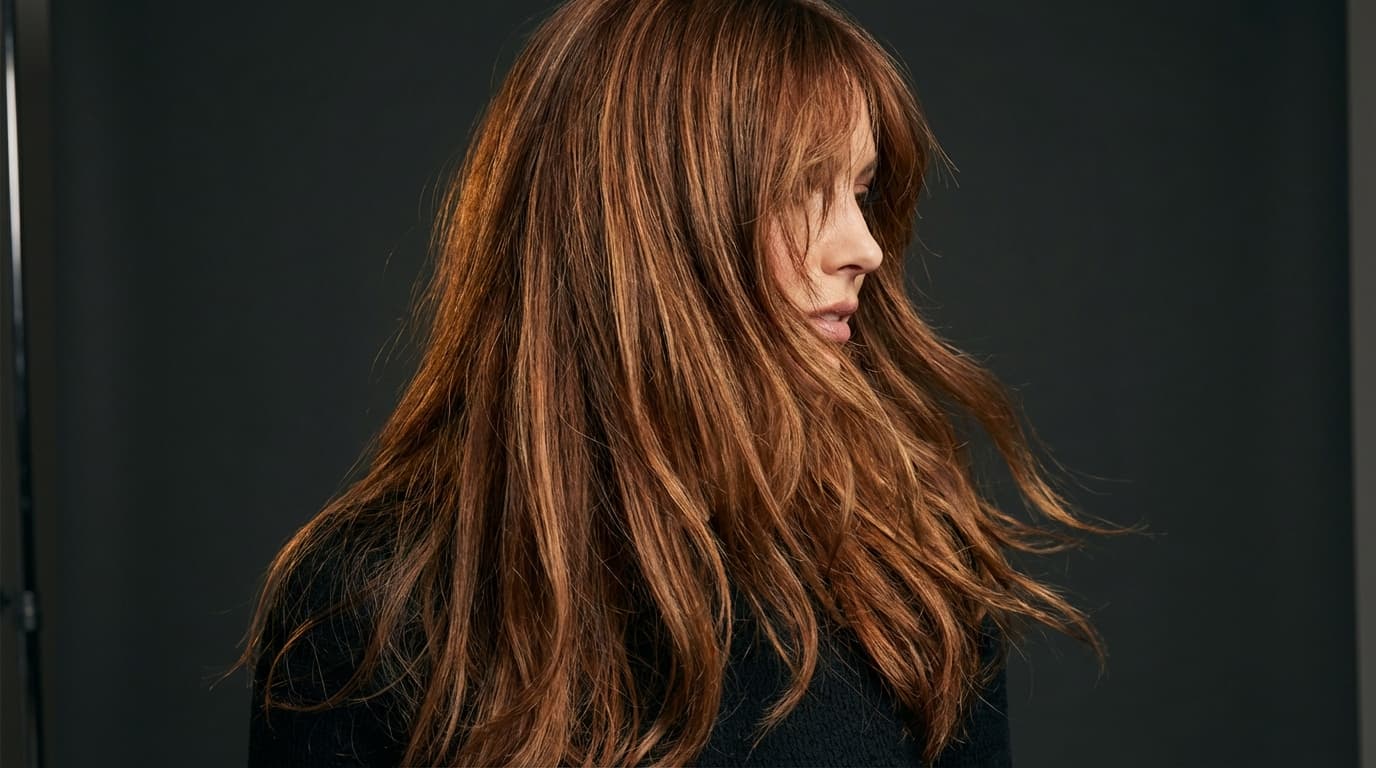
Layers are the single most versatile tool in a hairstylist's toolkit. They can add volume to flat hair, remove bulk from thick hair, frame a face beautifully, or create movement where none exists. Almost every trending cut of the last decade -- the butterfly cut, the wolf cut, curtain bangs, the modern shag -- is built on a foundation of layers.
But "I want layers" is one of the vaguest requests you can make in a salon chair. There are at least six distinct types of layering, and the wrong choice for your face shape or hair texture can leave you with a cut that fights your natural features instead of flattering them.
This guide breaks down every type of layered haircut, maps each one to the face shapes and hair types it works best with, and gives you the exact language to use when you sit down with your stylist. No ambiguity. No guesswork.
What Are Layers and How Do They Work?
Layers are sections of hair cut to different lengths throughout the head. Instead of all your hair falling to a single length (a "one-length" or blunt cut), layered hair has shorter pieces on top that graduate into longer pieces underneath.
This accomplishes several things:
- Movement. Layers break up the weight of the hair, allowing individual sections to swing and shift independently. One-length hair tends to move as a single mass.
- Volume. Shorter layers on top lift away from the head, creating the illusion of fullness -- especially at the crown and around the face.
- Shape. Layers create a silhouette. Without them, hair hangs straight down in a curtain. With them, it tapers, frames, and flows.
- Texture. Layered ends catch light differently and create visual interest that flat, blunt cuts lack.
The critical variable is the difference between your shortest layer and your longest layer. A 2-inch difference creates subtle, blended movement. A 6-inch difference creates dramatic shape and volume. That gap determines whether you get "my hair just moves nicely" or "my entire silhouette changed."
Understanding this principle is the key to communicating what you actually want to your stylist. It is not about whether you want layers -- it is about how much contrast between the shortest and longest sections.
Types of Layers
Not all layers are created equal. Here are the six main types you will encounter, what they look like, and who they work best for.
Long Layers
Long layers have the smallest difference between the shortest and longest sections -- typically 2 to 4 inches. The layering is subtle, blending seamlessly so you might not even notice the layers until the hair moves. The overall length stays intact.
Best for: Anyone who wants movement without sacrificing length. Excellent starting point if you have never had layers before. Works on virtually every face shape and hair type.
Looks like: Your hair appears one length when still but reveals subtle dimension when it swings or catches a breeze.
Short Layers
Short layers start high on the head -- sometimes as short as 3 to 4 inches at the crown -- and the difference between the top and bottom is dramatic, often 6 inches or more. This creates significant volume at the top and a tapered shape through the mid-lengths and ends.
Best for: Thick hair that needs bulk removed, fine hair that needs volume at the crown, and anyone who wants a noticeably shaped silhouette rather than subtle movement.
Looks like: Clearly defined layers with visible shape. The hair is fuller at the top and lighter at the bottom.
Face-Framing Layers
Face-framing layers are cut specifically around the front of the hair to frame the face. They typically start at the cheekbone, jaw, or chin and blend into the rest of the hair. The rest of the cut may or may not have layers -- face-framing is often added on top of a one-length cut or combined with other layering types.
Best for: Everyone, with adjustments for face shape. Face-framing layers are the most universally flattering type because they direct attention to the features you want to highlight. For a deeper look at how face shape drives hairstyle decisions, check our guide on how to choose a hairstyle.
Looks like: Shorter pieces around the face that taper into the full length of the hair. Think of them as a built-in frame.
Curtain Layers
Curtain layers are a specific form of face-framing where the front pieces are cut to fall on either side of a center part, creating a curtain-like effect that parts naturally around the face. They blend seamlessly into the hair on either side rather than standing out as distinct shorter pieces.
Best for: Oval, heart, and oblong faces. The center-parted framing softens the forehead and draws the eye to the cheekbones. They pair naturally with bangs -- in fact, curtain bangs are essentially curtain layers taken shorter.
Looks like: Two flowing panels of hair that sweep away from the center part, framing the face symmetrically.
Razored Layers
Razored layers are cut with a razor blade rather than scissors, creating wispy, feathered ends with a lot of texture. The layers blend into each other with soft, almost shredded-looking tips rather than clean lines.
Best for: Thick hair that needs thinning and texture. Creates an effortlessly tousled, lived-in look. Popular in shag cuts and modern mullets.
Caution: Razored layers on fine or thin hair can make the ends look stringy and sparse. If your hair is already lacking density, stick with scissor-cut layers.
Looks like: Soft, piecey, textured ends with no hard lines. The overall effect is relaxed and undone.
Choppy Layers
Choppy layers are cut with deliberate unevenness -- the stylist creates visible contrast between sections, leaving some pieces noticeably shorter than their neighbors. The result is edgy, textured, and intentionally imperfect.
Best for: Anyone who wants a bold, modern look. Thick hair responds especially well because the choppiness prevents it from looking too heavy. This is the layering technique behind the wolf cut and many contemporary shag styles.
Looks like: Visible, intentional unevenness with strong texture. The opposite of blended, seamless layering.
Quick Layer Type Comparison
| Type | Length Difference | Texture | Volume | Maintenance | Best For |
|---|---|---|---|---|---|
| Long layers | 2-4 inches | Subtle | Moderate | Low | Any hair, conservative styles |
| Short layers | 6+ inches | Dramatic | High at crown | Medium | Thick or fine hair needing shape |
| Face-framing | Varies | Soft around face | At face | Low | Universal |
| Curtain | 3-5 inches | Flowing | At cheekbones | Low-medium | Oval, heart, oblong faces |
| Razored | Varies | Wispy, feathered | Medium | Medium | Thick hair only |
| Choppy | 4-6 inches | Edgy, piecey | High | Medium-high | Bold, textured looks |
Different Types of Layered Haircuts by Hair Type
The right layer type depends as much on hair texture as it does on face shape. Use this as a shortcut before you choose reference photos:
| Hair type | Best layer types | Be careful with |
|---|---|---|
| Fine or thin hair | Long layers, subtle face-framing, blunt ends | Heavy razored layers that make ends look sparse |
| Thick hair | Short layers, razored layers, choppy layers | One-length cuts with no weight removal |
| Straight hair | Long layers, curtain layers, precise face-framing | Uneven layers unless you want an edgy look |
| Wavy hair | Face-framing layers, long layers, butterfly-style layers | Too many short crown layers that create frizz |
| Curly hair | Dry-cut long layers, rounded layers, face-framing curl pieces | Wet-cut layers that shrink shorter than expected |
Layers by Face Shape
The type of layers you choose, where they start, and how dramatic they are should all be influenced by your face shape. Here is the breakdown for each. Not sure what your face shape is? Upload a selfie to our AI tool and find out, or read our face shape guide.
Round Face
Goal: Create the illusion of length and angles. Avoid adding width at the cheeks.
Best layer types: Long layers, face-framing layers that start below the cheekbone, and curtain layers with a deep side part.
What works: Layers that start at or below the chin elongate the face by drawing the eye downward. A side part creates asymmetry that counteracts the circular silhouette. Vertical face-framing pieces that fall alongside the jaw slim the appearance of the cheeks.
What to avoid: Short layers that add volume at the sides of the head. Choppy layers at cheek level. Anything that creates width at the widest point of your face.
For the complete round face playbook, read best haircuts for round faces.
Oval Face
Goal: You already have balanced proportions. The goal is to enhance them without throwing anything off.
Best layer types: Almost any. Oval faces are the most versatile canvas for layers. Long layers, short layers, curtain layers, face-framing, choppy -- they all work.
What works: Freedom. Oval faces can handle dramatic layering without proportion issues. Experiment with volume placement, layer intensity, and face-framing length. This is the one face shape where you truly can try anything.
What to avoid: Very heavy, blunt layers that completely obscure your balanced bone structure. Beyond that, the world is open.
For more, see best hairstyles for oval faces.
Square Face
Goal: Soften the strong jawline and angular corners. Create roundness and movement around the jaw area.
Best layer types: Long layers with soft face-framing. Curtain layers. Razored layers for soft, feathered ends.
What works: Layers that fall around and past the jawline, softening the angles. Wispy, textured ends that create movement rather than hard lines. Side-swept face-framing pieces that break up the strong horizontal forehead line.
What to avoid: Blunt layers that end exactly at the jawline -- this draws a hard line right at your strongest feature. Choppy layers at jaw height that emphasize the squareness. Very short layers that add volume at the temples (widening the already broad forehead).
Heart-Shaped Face
Goal: Add width and volume around the jawline to balance the wider forehead and cheekbones.
Best layer types: Face-framing layers that start at or below the chin. Long layers with volume at the ends. Curtain layers that pair with curtain bangs to narrow the forehead.
What works: Layers concentrated in the lower half of the hair, adding volume and width around the jaw and neck. This balances the top-heavy proportions of a heart shape. Curtain bangs soften the wider forehead.
What to avoid: Short layers that add volume at the crown and temples -- this exaggerates the already-wide upper face. Layers that end at the cheekbone, which highlight the widest point rather than the narrowest.
Oblong Face
Goal: Create width and break up the vertical length. Avoid adding height.
Best layer types: Medium-length layers that build volume at the sides. Face-framing layers at cheekbone level. Curtain bangs paired with face-framing layers.
What works: Layers that add horizontal dimension -- width at the cheekbones and jaw rather than height at the crown. Bangs (especially curtain bangs or side-swept bangs) shorten the visible forehead length. Layers that hit at the shoulders or above prevent the hair from elongating the face further.
What to avoid: Very long, one-length hair with minimal layering (this exaggerates the length). Short layers at the crown that add height. Center parts with no framing that reveal the full forehead length.
Face Shape Cheat Sheet
| Face Shape | Best Layer Types | Key Placement | Avoid |
|---|---|---|---|
| Round | Long, face-framing below chin | Below cheekbones | Width at cheeks, short crown layers |
| Oval | Any type works | Anywhere | Overly blunt, face-obscuring layers |
| Square | Long, curtain, razored | Around and past jaw | Jaw-line blunt layers |
| Heart | Face-framing at chin, long layers | Lower half volume | Crown volume, cheekbone-level layers |
| Oblong | Medium, face-framing at cheekbone | Sides for width | Crown height, very long hair |
Layers by Hair Length
The length of your hair determines which layer types are available to you and how dramatic the result can be.
Short Hair (Above Shoulders)
Layers on short hair are about creating shape and texture rather than dramatic movement. You are working with less real estate, so every cut counts.
What works: Short layers at the crown for volume (especially effective in pixie cuts and bobs). Razored ends for texture. Face-framing pieces that taper from the cheekbone to the jaw.
Keep in mind: With short hair, the difference between your shortest and longest layer will be smaller by necessity -- typically 1 to 3 inches. The effect is shape and texture rather than flowing movement.
Medium Hair (Shoulders to Mid-Back)
Medium-length hair is the sweet spot for layering. There is enough length to create real contrast between short and long layers, but not so much that the layers get lost. This is where face-framing layers, curtain layers, and the butterfly cut truly shine.
What works: Every layer type is available at this length. Long layers for subtle movement. Short layers for dramatic volume. Face-framing for definition. Choppy for edge. Medium hair gives you maximum flexibility.
Keep in mind: If your hair is on the thinner side, be conservative with layer intensity at this length. Too many layers can make medium-length thin hair look wispy rather than full. Check our thin hair guide for specific recommendations.
Long Hair (Mid-Back and Beyond)
Long layered hair is a classic for a reason. Layers prevent long hair from looking heavy, flat, or shapeless. Without them, very long hair can fall like a curtain with no dimension.
What works: Long layers maintain the length while adding movement. Face-framing layers create shape around the face that the full length alone cannot provide. Short layers at the crown (the butterfly cut approach) create dramatic volume contrast. Curtain layers frame the face beautifully on long hair.
Keep in mind: The longer your hair, the more length between trims, and layered hair grows out faster than one-length cuts. Budget for trims every 8 to 10 weeks to maintain the shape. Also, long layers on very long hair can look almost invisible -- you may need more contrast than you think.
Layers by Hair Texture
Your hair's natural texture has as much impact on the result as the cutting technique itself. The same layering approach looks dramatically different on straight versus curly hair.
Thin or Fine Hair
Goal: Create the illusion of volume and density without removing too much bulk.
Best approach: Long layers with minimal contrast (2 to 3 inches between shortest and longest). Blunt ends rather than razored or feathered -- blunt cuts make thin hair look thicker. Face-framing layers add dimension without sacrificing overall density. Avoid heavy layering throughout; concentrate it strategically.
Avoid: Razored layers (they thin out already-thin ends). Too many short layers (they reduce the visual mass of the hair). Any technique that makes the ends look sparse.
For a full breakdown, read best hairstyles for thin hair.
Thick Hair
Goal: Remove excess bulk, create movement, and prevent the hair from looking like a solid mass.
Best approach: Almost any layer type works, and thick hair actually needs layers more than any other texture. Short layers thin out the crown. Razored layers create texture and reduce weight. Choppy layers add edge and prevent heaviness. Even dramatic layering (6+ inches of contrast) looks balanced on thick hair because there is plenty of density to spare.
Avoid: Skipping layers entirely. One-length thick hair is heavy, hard to style, and prone to looking shapeless. If anything, err on the side of more layering, not less.
Straight Hair
Goal: Add movement and dimension to hair that naturally lies flat.
Best approach: Layers create the movement that straight hair does not have on its own. Long layers add subtle swing. Face-framing layers provide shape. Curtain layers give straight hair that effortless, flowing quality. A round brush blowout makes layers on straight hair look editorial.
Keep in mind: On very straight hair, layers are more visible -- every cut line shows. This means precise, well-blended layers are essential. Choppy or disconnected layers will look intentionally edgy, which may or may not be the goal.
Wavy Hair
Goal: Enhance the natural wave pattern and prevent the hair from looking bushy or shapeless.
Best approach: Wavy hair is arguably the best texture for layers. The natural wave creates automatic volume and movement, and layers amplify that beautifully. Long layers let the waves cascade. Face-framing layers create soft, natural-looking curves around the face. Medium contrast (3 to 5 inches) tends to be the sweet spot.
Keep in mind: Wavy hair can look incredible air-dried with layers. A lightweight curl cream or sea salt spray is often all you need.
Curly Hair
Goal: Create shape without disrupting curl formation. Reduce bulk where needed while maintaining curl definition.
Best approach: Get layers cut dry by a curl specialist. Curls shrink when dry, so the visible layer lengths need to be determined based on where the curls naturally fall -- not when stretched out. Long layers maintain curl clumping. Face-framing layers create defined ringlets around the face.
Keep in mind: Short layers at the crown can create a triangular silhouette on curly hair if not cut carefully -- the top poofs out while the bottom stays weighted down. Work with a stylist experienced in curly hair specifically.
How to Style Layered Hair
Layers are lower-maintenance than most people expect, but a few minutes of intentional styling makes the difference between "layers you can see" and "layers that look like they were cut yesterday."
Daily Basics
- Start with the right product. Volumizing mousse or spray for fine hair, smoothing cream for thick hair, curl cream for wavy or curly hair. Apply to damp hair before drying.
- Blow-dry strategically. You do not need to blow-dry your entire head. Focus on the face-framing layers and the crown -- these are the sections that define the shape of the cut. Direct heat upward at the roots for lift, then use a round brush to shape the front pieces.
- Let the rest air-dry. The mid-lengths and ends usually look fine without heat styling. If you want extra polish, a quick pass with a flat iron on the top layer adds sleekness.
- Finish light. A flexible-hold hairspray or texture spray prevents face-framing layers from falling flat throughout the day. Avoid heavy products that weigh down the layers.
Making Layers Last Between Trims
Layered cuts start losing their shape after about 6 to 8 weeks. The face-framing pieces grow out first. Between trims:
- Use dry shampoo at the roots on non-wash days to maintain volume at the crown.
- Re-shape the face-framing layers with a flat iron or curling iron if they start to lose their curve.
- Avoid tucking your hair behind your ears constantly -- this trains the face-framing layers to lie flat.
What to Tell Your Stylist
"I want layers" is the starting point, not the destination. Here is exactly how to communicate what you want.
Be specific about type:
- "I want long layers for movement, not a dramatic shape change."
- "I want face-framing layers that start at my chin."
- "I want choppy layers with visible texture."
- "I want curtain layers that frame a center part."
Specify the contrast:
- "I want a subtle difference between my shortest and longest layer -- maybe 2 to 3 inches."
- "I want dramatic layering with 5 to 6 inches of contrast."
Address the ends:
- "I want feathered, wispy ends." (For thick hair, volume reduction.)
- "I want blunt ends." (For thin hair, density preservation.)
Reference your face shape:
- "I have a round face, so I want the face-framing layers below my cheekbones, not at them."
- "I have an oblong face, so I want layers that add width, not height."
Bring photos. At least 3 to 4 examples, ideally on people with a similar hair texture and face shape. Show what you want and what you want to avoid.
Mention your maintenance tolerance:
- "I air-dry every day." (Your stylist will adjust the cut for texture rather than blow-dry-dependent shape.)
- "I am willing to spend 10 minutes styling." (More precision layering is possible.)
Not sure what kind of layers will work on your face? See how different layered styles would look on you before committing. A realistic AI preview takes the uncertainty out of the conversation entirely.
Frequently Asked Questions
Are layered haircuts high maintenance?
It depends on the type. Long layers are among the lowest-maintenance cuts you can get -- they grow out gracefully and rarely hit an awkward stage. Short layers and choppy layers need more frequent trims (every 6 to 8 weeks) because the shape becomes less defined as they grow. Face-framing layers fall somewhere in between. In general, layers require slightly more upkeep than a one-length cut but far less than a bob or a pixie.
Do layers make thin hair look thinner?
They can, if done wrong. Heavy layering removes bulk that thin hair cannot afford to lose, leaving the ends looking sparse and see-through. But strategic layers -- specifically long layers with minimal contrast and blunt ends -- actually make thin hair look fuller by creating volume at the crown. The key is restraint: fewer layers, less contrast, blunt rather than razored ends.
What is the difference between layered and textured hair?
Layers refer to sections cut at different lengths. Texture refers to the finish of the ends -- whether they are smooth, choppy, feathered, or razored. You can have layers without texture (long layers with blunt ends) or texture without layers (a one-length cut with razored ends). Most modern layered cuts include some texturing, but they are technically separate techniques.
Can I get layers without losing length?
Yes. Long layers preserve the overall length of your hair while adding movement through the mid-lengths. Face-framing layers only affect the front sections, leaving the rest at full length. Even a dramatic butterfly cut keeps the longest layers at the original length -- the volume comes from shorter layers on top, not from cutting the bottom shorter.
How do I know if I need layers?
Consider layers if your hair feels heavy or shapeless, if it lies flat against your head, if you want more movement, or if your face needs framing or balancing. If you are happy with how your hair falls and have no complaints about volume or movement, a one-length cut may suit you better. Layers are a solution to specific problems -- they are not universally necessary.
Will layers work with my curly hair?
Absolutely, but the execution matters more than with any other texture. Curly hair must be cut dry by someone who understands curl patterns, because curls shrink significantly when dry and each curl clump behaves differently. The wrong layers on curly hair can create a triangle shape -- wide at the bottom, flat on top. The right layers create defined shape, reduce bulk strategically, and let your curls form properly.
How often should I trim layered hair?
Every 8 to 10 weeks for most layer types. Face-framing layers may need attention sooner (6 to 8 weeks) because they grow out of position faster since they are the shortest sections. If you have long layers with minimal contrast, you can stretch to 10 to 12 weeks without the cut looking overgrown.
Should I get layers or curtain bangs?
They are not mutually exclusive. Curtain bangs are a specific type of face-framing layer, and they pair beautifully with almost any layered cut. If you want both, tell your stylist -- curtain bangs will flow naturally into face-framing layers and create a cohesive look. For a detailed breakdown on whether bangs are right for you, read our guide on whether you should get bangs.
Related Guides
- Best Hairstyle for Your Face Shape -- find your face shape first
- Best Haircuts for Round Faces -- detailed round face guide
- Best Hairstyles for Oval Faces -- the most versatile face shape
- Best Hairstyles for Thin Hair -- strategic volume building
- Butterfly Cut Guide -- the trending heavy-layer cut
- Wolf Cut Guide -- edgy, choppy layers explained
- Should I Get Bangs? -- bangs and layers work together
- Women's Haircut Trends 2026 -- what is trending right now
- Pixie Cut Guide -- layers on short hair
- How to Choose a Hairstyle -- the systematic approach
Final Thoughts
Layers are not a one-size-fits-all solution -- they are a toolkit. The right type of layers, placed correctly for your face shape and adapted to your hair texture, can transform a flat, shapeless cut into something with dimension, movement, and personality. The wrong layers can make thin hair look thinner, round faces look rounder, and good haircuts look grown out.
The difference comes down to specificity. Know your face shape. Know your hair type. Know the exact type of layering you want. And if you are still not sure, try it on yourself first. A few seconds with an AI preview is worth more than any amount of Pinterest scrolling.
Choose a Look for Your Next Appointment
Upload your selfie to see a suggested haircut on your face. Compare the shape before discussing the details with your barber.
Try Your New Haircut Now