Best Haircut Recommendations by Face Shape (2026)
Jump to a section
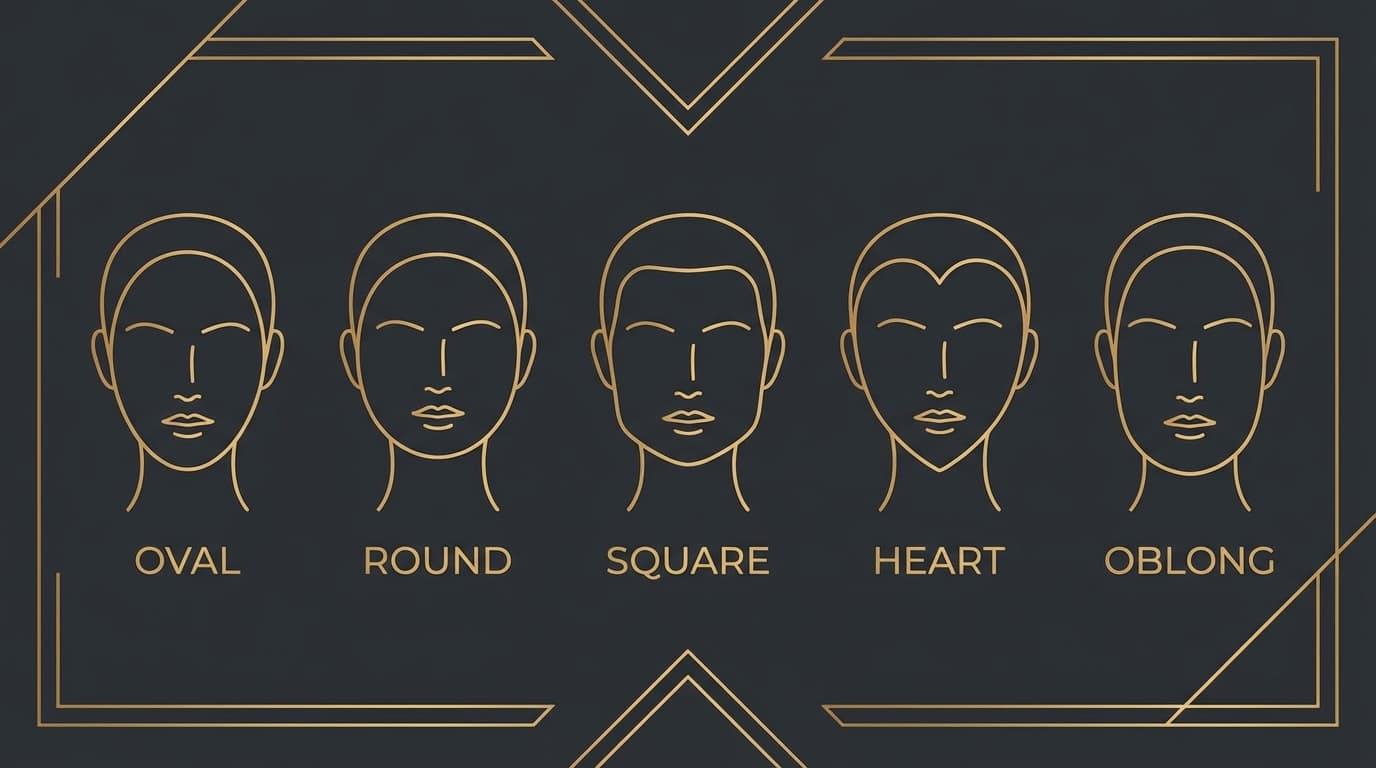
Why Your Face Shape Holds the Key to a Great Hairstyle
Every year, millions of people walk out of salons disappointed. Not because their stylist did a bad job, but because the haircut they chose simply did not match their face. The difference between a haircut that makes you look sharp and one that feels off usually comes down to one factor: face shape compatibility.
Your face shape is the foundation of any hairstyle decision. It determines which cuts add balance, which ones throw off your proportions, and which ones make your best features stand out. The good news is that once you understand your face shape, choosing a flattering hairstyle becomes dramatically easier.
This guide will teach you exactly how to measure your face shape, walk you through the best hairstyles for each one with specific do's and don'ts, and show you how AI tools can help you make a confident decision before touching a pair of scissors.
How to Determine Your Face Shape: The Measurement Method
Forget the vague "look in the mirror and guess" approach. Here is a precise, measurement-based method that takes about two minutes:
What you need:
- A flexible measuring tape (or a piece of string and a ruler)
- A mirror
- A pen and paper
Step 1: Measure your forehead
Measure across the widest part of your forehead, typically from the peak of one eyebrow arch to the other. Write down this number.
Step 2: Measure your cheekbones
Measure across the widest part of your cheekbones. The easiest way is to find the pointy part of the bone below the outer corner of each eye and measure that distance.
Step 3: Measure your jawline
Measure from the tip of your chin to just below your ear where your jaw angles upward. Multiply by two to get the full jawline width.
Step 4: Measure your face length
Measure from the center of your hairline straight down to the tip of your chin.
Now compare:
| Face Shape | Key Characteristics |
|---|---|
| Oval | Face length is greater than cheekbone width. Forehead is wider than jawline. Jaw is rounded. |
| Round | Cheekbone width and face length are similar. Full cheeks. Rounded jaw and hairline. |
| Square | All measurements are fairly similar. Strong, angular jaw. Straight sides. |
| Heart | Forehead is widest. Face narrows to a small or pointed chin. |
| Diamond | Cheekbones are widest. Narrow forehead and pointed chin. Angular shape. |
| Oblong | Face length is the largest measurement by far. Width measurements are fairly equal. |
If you want to skip the measuring tape entirely, you can use an AI face analysis tool. MyNewHaircuts analyzes your facial structure from a selfie and can help you identify your shape.
Quick Reference: Best Hairstyles by Face Shape
| Face Shape | Best Styles (Men) | Best Styles (Women) | Avoid | Key Principle |
|---|---|---|---|---|
| Oval | Textured crop, pompadour, quiff | Long layers, bob, pixie | Heavy bangs that hide forehead | Almost anything works — don't overthink it |
| Round | Pompadour, faux hawk, undercut | Side-parted lob, long layers | Chin-length bobs, one-length cuts | Add height and angles to elongate |
| Square | Textured crop, side part, quiff | Soft waves, side-swept bangs, shag | Blunt bobs, flat tops | Soften the jawline with texture and layers |
| Heart | Curtain hair, textured fringe | Chin-length bob, curtain bangs | Slicked back, short sides with volume on top | Balance wider forehead with jaw-level volume |
| Diamond | Side part, textured fringe | Chin-length styles, side-swept bangs | Narrow styles that emphasize cheekbones | Add width at forehead and jaw |
| Oblong | French crop, textured fringe | Bob with bangs, beach waves | Long straight hair, tall pompadours | Add width, reduce visual length |
Want to see these styles on YOUR face? Try our AI hairstyle tool — it detects your face shape and shows you which cuts suit you best.
For detailed guides on each shape, see: oval, round, square, heart, oblong.
2026 Haircut Recommendations Based on Face Shape
If you only want the fastest answer, start with these face-shape matches. They are the cuts that balance proportions most reliably before you refine for hair texture, density, and styling effort.
| If your face is... | Start with these haircuts | Why it works |
|---|---|---|
| Oval | Textured crop, side part, layered bob, pixie | Balanced proportions can handle short, medium, or long shapes. |
| Round | Low taper fade with height, side-parted lob, long layers | Tight sides or longer vertical lines make the face look less wide. |
| Square | Textured crop, soft waves, curtain layers | Texture softens the jaw without hiding strong features. |
| Heart | Curtain hair, chin-length bob, side-swept fringe | Adds visual weight near the jaw and reduces forehead emphasis. |
| Diamond | Side part, textured fringe, chin-length layers | Adds width where the forehead and chin are narrower. |
| Oblong | French crop, full fringe, bob with bangs | Reduces visual length and adds width at the sides. |
If you are choosing between two cuts, preview both before booking. The right face-shape match usually looks obvious once you compare the options on your own photo.
Best Hairstyles for Each Face Shape
Oval Face: The Versatile Canvas
The oval face is widely considered the most balanced face shape, meaning it can pull off the widest range of hairstyles. If this is you, consider yourself lucky - but do not get lazy. Some styles still work better than others.
Do:
- Experiment freely with short, medium, and long styles
- Try a clean side part for a polished look
- Go for a textured crop if you want something modern and easy
- Consider a buzz cut or crew cut - oval faces handle them well
- Rock a slicked-back undercut for a sharp, editorial look
Don't:
- Cover your forehead with thick, heavy bangs - it shortens the face and hides your balanced proportions
- Default to generic, unstyled medium-length hair - you have the shape to make bold choices, so take advantage
Top picks: Textured crop, classic side part, crew cut, undercut with slick-back
Round Face: Add Length and Angles
Round faces are characterized by soft curves and equal width-to-length proportions. The goal is to create the illusion of a longer, more angular face.
Do:
- Add height on top - pompadours, quiffs, and tall fades are your best allies
- Keep the sides tight with mid-to-high fades to reduce width
- Try angular, structured styles that contrast with your natural curves
- Consider a disconnected undercut - the sharp contrast between top and sides adds edge
Don't:
- Wear your hair at ear length with no layers - it adds width right at the widest point of your face
- Get a uniform-length buzz cut - it follows the round outline and makes your face look rounder
- Part your hair straight down the middle without volume - center parts can emphasize roundness
Top picks: High-volume pompadour, textured quiff with high fade, faux hawk, angular fringe
Square Face: Soften the Edges
Square faces have strong, angular jawlines and roughly equal proportions across the forehead, cheekbones, and jaw. The structure is inherently striking, so the goal is to complement - not compete with - those angles.
Do:
- Embrace texture and natural movement - messy, undone styles soften the hard angles
- Try a textured fringe or curtain bangs to add softness across the forehead
- Consider medium-length styles that fall naturally - they create a relaxed contrast to the angular jaw
- A short beard can actually complement a square face by rounding off the jaw slightly
Don't:
- Get a flat-top or boxy cut - it doubles down on the geometric shape and looks too rigid
- Slick everything back tightly - it exposes the full square outline and can look severe
- Go ultra-short on the sides with a long, flat top - the contrast creates a rectangular silhouette
Top picks: Textured fringe, messy swept-back, layered medium-length cut, crew cut with soft texture
Heart Face: Balance the Top and Bottom
Heart-shaped faces have a wider forehead that narrows to a smaller chin. The goal is to reduce the visual weight at the top and add it at the bottom.
Do:
- Use a side-swept fringe to partially cover the broad forehead
- Opt for medium-length styles that add fullness around the jaw and ears
- Try a chin-length bob or layered cut if you wear longer hair
- Consider styles with more volume at the sides than the top
Don't:
- Go for a slicked-back style that fully exposes the forehead - it makes the top-heavy proportions more pronounced
- Add tall volume on top (pompadours, high quiffs)- they widen an already wide forehead
- Get a very short cut on the sides while the forehead is exposed - it narrows the bottom even further
Top picks: Side-swept fringe, textured layers hitting the jawline, chin-length bob, medium-length side part
Diamond Face: Fill in the Top and Bottom
Diamond faces are angular with prominent cheekbones and a narrow forehead and chin. This face shape benefits from adding visual width at the forehead and weight at the jawline.
Do:
- Add volume and fullness at the temples and forehead - swept-back styles with volume work well
- Try a fringe or bangs to widen the narrow forehead visually
- Consider longer styles that reach the jawline or below, adding fullness where the face narrows
- Textured, tousled looks add bulk in the right places
Don't:
- Slick the hair flat against the head - it exposes the narrow forehead and chin, making the cheekbones look disproportionately wide
- Get very short sides that highlight the cheekbone width
- Go for center-parted, flat styles - they create a vertical line that narrows the face further
Top picks: Textured fringe, side-swept volume, medium-length messy layers, swept-back with body
Oblong Face: Create Width, Reduce Length
Oblong (rectangular) faces are noticeably longer than they are wide. The proportions feel elongated. The goal is to add width and visually shorten the face.
Do:
- Get a fringe or bangs - they cover part of the forehead and immediately make the face appear shorter
- Add volume on the sides - blow-dried medium styles with lateral body work well
- Try a layered cut that creates movement at the ears and cheeks
- Consider a curly or wavy style - the natural volume adds width everywhere
Don't:
- Add height on top - pompadours, tall quiffs, and any upward volume will make an oblong face look even longer
- Wear long, straight hair with no layers - it creates a vertical frame that elongates further
- Get a high fade with length on top - the tall, narrow silhouette is exactly what you want to avoid
Top picks: Textured fringe, side-parted medium length with volume, layered bob, curly or wavy natural styles
The Role of Hair Texture in Your Decision
Face shape is only one consideration. Hair texture, density, growth patterns, and your styling routine also affect which cuts are practical. Here is a quick guide:
Fine, straight hair: Responds well to textured crops, side parts, and layered cuts. Avoid very long styles that can look flat and lifeless. Ask your stylist about texturizing techniques.
Thick, straight hair: Can handle almost any length and style. Pompadours, slick-backs, and longer swept styles work particularly well because you have the density to hold the shape.
Wavy hair: Naturally adds volume and texture, which means you need less product and effort. Medium-length styles that work with the wave are ideal. Avoid fighting your waves with a very short, precise cut.
Curly hair: Embrace the curl. Curly styles add automatic volume and texture, which is great for round and oblong faces. Make sure your stylist cuts your hair dry - wet cutting can lead to uneven results with curly textures.
Thinning hair: Shorter styles generally work better. A buzz cut, crew cut, or short textured crop can look confident and sharp. Avoid long styles that expose thinning areas.
How AI Is Changing the Hairstyle Decision
Historically, choosing a haircut was a leap of faith. You would look at photos of models and celebrities, try to mentally translate their features onto your own face, and hope for the best. This is an inherently flawed process because your face is not their face.
AI hairstyle technology fundamentally solves this problem. Here is how it works:
- Facial analysis- AI maps the geometry of your face: the width of your forehead, the angle of your jaw, the distance between your features.
- Style rendering- Using neural networks, the AI generates a realistic image of you wearing a specific hairstyle, accounting for your skin tone, hair color, and lighting.
- Instant comparison- You can flip between dozens of styles in minutes, seeing each one on your actual face rather than on a generic model.
This is not a gimmick. It is a practical tool that eliminates the single biggest source of bad haircuts: the imagination gap between what you picture in your mind and what actually appears on your head.
Try it yourself- upload a selfie and preview different hairstyles on your face before your appointment.
Putting It All Together: Your Action Plan
- Measure your face using the method above, or let AI analyze it for you.
- Identify your face shape from the six categories.
- Read the do's and don'ts for your specific shape.
- Factor in your hair texture- make sure the style you want is realistic for your hair type.
- Preview with AI- upload your selfie and test your shortlisted styles before committing.
- Show your stylist the AI-generated preview so they know exactly what you want.
The days of guessing are over. Between face shape science and AI preview technology, you can walk into any salon knowing exactly what you want and exactly how it will look. That is the kind of confidence that leads to a great haircut every single time.
Frequently Asked Questions
How do I determine my face shape?
The most accurate method is measuring four dimensions: forehead width, cheekbone width, jawline width, and face length from hairline to chin. Compare these measurements to identify whether your face is oval (length greater than width, rounded jaw), round (equal width and length), square (all measurements similar with angular jaw), heart (wide forehead, narrow chin), diamond (wide cheekbones, narrow forehead and chin), or oblong (face much longer than wide). You can also upload a selfie to an AI face analysis tool for instant identification.
What face shape is the most versatile for hairstyles?
Oval faces are considered the most versatile because their naturally balanced proportions work with nearly every haircut style. The forehead and jaw are roughly the same width, and the face length is about 1.5 times the width, creating natural harmony that does not require compensation from a haircut. That said, every face shape has plenty of flattering options when you choose styles that complement your specific proportions.
Can I change my apparent face shape with a haircut?
Yes, that is exactly what a well-chosen haircut does. A round face can appear more oval with height on top and tight sides. A long face can appear shorter with bangs and side volume. The principle behind every recommendation is creating the illusion of balanced, oval-like proportions through strategic use of volume, length, and angles.
Does hair texture affect which face shape hairstyles work?
Absolutely. Hair texture determines what is realistic for your hair to do. Curly hair adds natural volume, which is great for adding width to oblong faces but can make round faces appear wider. Fine straight hair works well for sleek styles but may struggle with high-volume looks. Always consider your texture alongside your face shape when choosing a cut.
How often should I update my hairstyle?
There is no fixed rule, but most people benefit from a trim every 4 to 8 weeks to maintain their cut's shape. As for changing styles entirely, do it whenever you feel ready for something new. Face shape does not change, so the same principles will apply whether you stick with one style for years or experiment every few months.
Explore by Face Shape
- Best Hairstyles for Oval Faces
- Best Haircuts for Round Faces
- Best Hairstyles for Square Faces
- Best Hairstyles for Heart-Shaped Faces
- Best Hairstyles for Oblong Faces
- Best Hairstyles for Thin Hair
- Should I Get Bangs?
- Men's Hairstyle Trends 2026
- Women's Haircut Trends 2026
- Low Taper Fade Guide — the most popular fade explained
- Butterfly Cut Guide — trending layered cut for women
- Hair Transformation Ideas — ready for a dramatic change?
- How to Choose a Hairstyle — the systematic method
- Best Hair Color for Your Face Shape — color matters too
- Wolf Cut Guide — the trending layered mullet hybrid
- Pixie Cut Guide — pixie styles for every face shape
- Textured Crop Guide — the modern men's classic
- Layered Haircut Guide — layers explained by face shape
- How to Talk to Your Barber — get exactly what you want
If you are still not sure where to start, our comprehensive guide on what haircut you should get breaks down the decision process step by step. And if you are specifically curious about going shorter, check out our guide on what you would look like with short hair.
Choose a Look for Your Next Appointment
Upload your selfie to see a suggested haircut on your face. Compare the shape before discussing the details with your barber.
Try Your New Haircut Now