Butterfly Cut: Is It Right for Your Face Shape? (2026 Guide)
Jump to a section
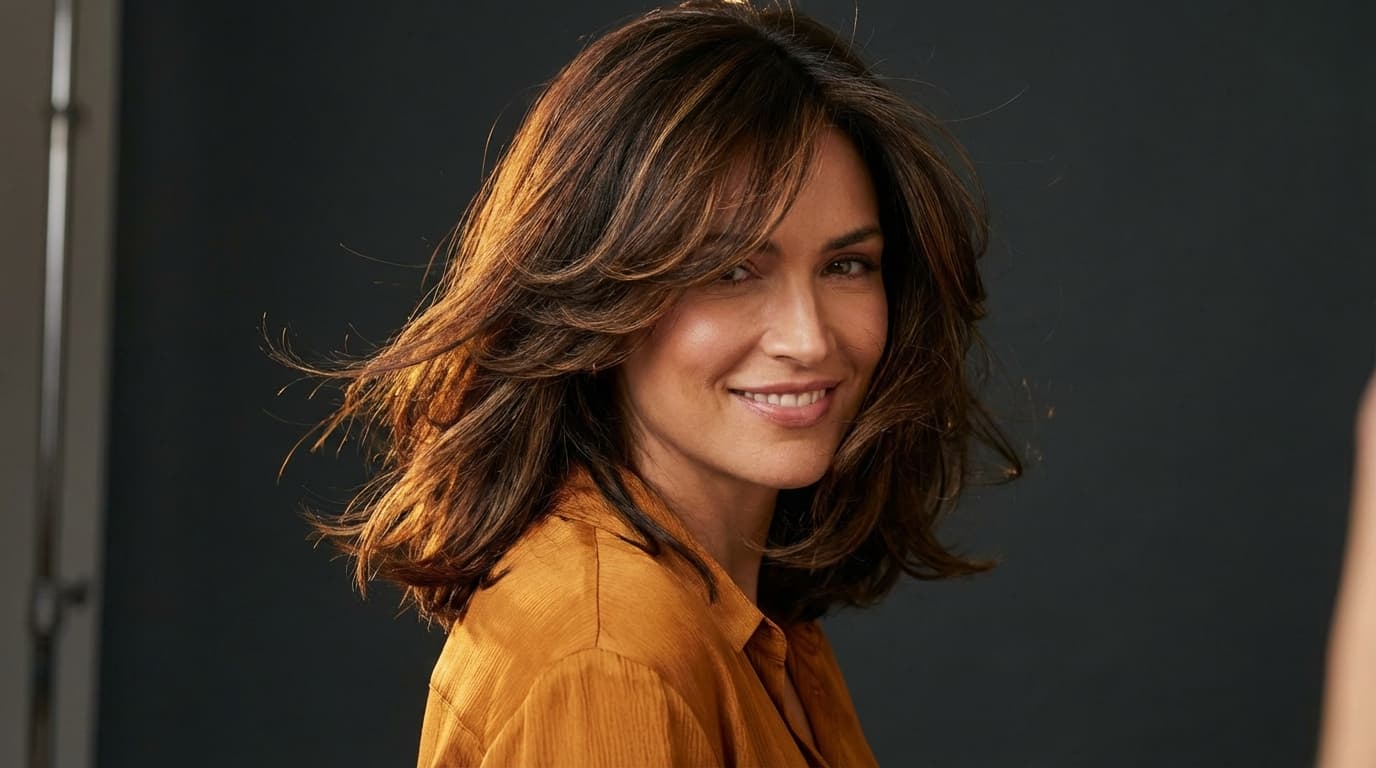
The butterfly cut has gone from niche salon request to one of the most searched hairstyles of 2026. Reddit threads, TikTok tutorials, and Instagram Reels are flooded with before-and-after transformations — and for good reason. Done right, it creates effortless volume, frames the face beautifully, and looks like you just stepped out of a 90s supermodel editorial.
Done wrong, it can look like a grown-out shag that lost its way.
This guide covers exactly what a butterfly cut is, who it works for, how it compares to similar layered cuts, and — most importantly — whether it will actually suit your face shape and hair type. No vague inspiration-board advice. Just the details you need before sitting in the chair.
What Is a Butterfly Cut?
A butterfly cut is a heavily layered hairstyle where the shortest layers sit at chin to shoulder length, creating a dramatic "wing" effect that fans outward — like butterfly wings framing the face. The longer layers underneath cascade down to create fullness and movement, while the shorter top layers add volume at the crown and around the jawline.
The defining features:
- Dramatic face-framing layers that start around the chin or cheekbone, creating a curtain-like effect around the face
- Significant layering throughout — this is not a subtle, blended layer situation. The difference between the shortest and longest layers is noticeable, often 6 inches or more
- Volume concentrated at the top and mid-lengths rather than at the ends, giving the hair a lifted, airy quality
- Soft, feathered ends rather than blunt cuts — the layers are designed to move, not sit rigid
- Works best at medium to long lengths — the hair needs enough length for the layering to create the butterfly silhouette
Think of it as the love child of 90s supermodel layers and curtain bangs. The top half of your hair has volume and shape. The bottom half has length and flow. The transition between them is where the magic happens.
Butterfly Cut vs Wolf Cut vs Layered Cut: What Is the Difference?
These three get confused constantly, and for good reason — they share DNA. But the differences matter, especially when you are sitting in the salon chair trying to explain what you want.
Butterfly Cut
Vibe: Polished, feminine, editorial. Think Cindy Crawford in 1993 meets modern effortlessness.
Key features: Heavy layering with the shortest layers at chin to shoulder level. Face-framing pieces are soft and curtain-like. Volume sits at the crown and mid-lengths. The overall silhouette is rounded and full at the top, tapering toward the ends.
Maintenance: Medium. Needs some blow-drying or styling to get the layers to fan out properly, but the cut is forgiving enough that air-dried texture looks good too.
Wolf Cut
Vibe: Edgy, textured, deliberately messy. Think Joan Jett meets bedhead.
Key features: Heavier, choppier layers with more razored texture. The layers are more disconnected and intentionally shaggy. Bangs (usually curtain or choppy) are almost always part of the cut. Volume is more concentrated at the very top of the head. The overall look is wilder and less polished.
Maintenance: Lower than you would think. The whole point is that it looks intentionally undone, so texture spray and air-drying work well.
Traditional Layered Cut
Vibe: Classic, versatile, blended. Think "I just want my hair to move nicely."
Key features: Layers are subtler and blend more seamlessly into each other. The difference between the shortest and longest layer is usually 2-4 inches rather than 6+. No dramatic face-framing wings. Volume is evenly distributed rather than concentrated at one level.
Maintenance: Low to medium. Traditional layers are the easiest of the three to style and grow out.
Quick Comparison
| Feature | Butterfly Cut | Wolf Cut | Traditional Layers |
|---|---|---|---|
| Layering intensity | Heavy, dramatic | Heavy, choppy | Subtle, blended |
| Face-framing | Soft, curtain-like wings | Choppy, shaggy | Minimal |
| Volume placement | Crown + mid-lengths | Crown + top | Evenly distributed |
| Bangs | Optional (curtain bangs common) | Almost always included | Optional |
| Vibe | Polished, feminine | Edgy, messy | Classic, versatile |
| Best for | Medium to long hair | Short to long hair | Any length |
| Grow-out | Graceful | Awkward without trims | Easy |
The bottom line: If you want volume and movement but still want to look put-together, go butterfly. If you want texture and edge, go wolf. If you want something safe and universally flattering, go traditional layers. For more on what is trending right now, check out women's haircut trends 2026.
Best Face Shapes for a Butterfly Cut
This is where most guides get lazy and say "it works for everyone." It does not. The butterfly cut is flattering on most face shapes, but the way you customize it matters enormously.
If you are not sure what your face shape is, start with our guide on the best hairstyle for your face shape or upload a selfie to our AI tool and it will tell you in seconds.
Oval Face — Best Match
An oval face is the sweet spot for a butterfly cut. The balanced proportions mean the voluminous top layers will not throw anything off, and the face-framing pieces will accentuate your cheekbones without adding unwanted width. You can go heavy on the layers without worrying about proportion issues.
Customization: You have the most freedom here. Go as dramatic as you want with the layering. Curtain bangs, side-swept bangs, or no bangs at all — they all work. For more ideas, check best hairstyles for oval faces.
Heart-Shaped Face — Excellent Match
The butterfly cut is almost tailor-made for heart-shaped faces. The chin-length face-framing layers add width around the jawline, which balances out a wider forehead. The volume at the mid-lengths fills in the narrower lower half of the face beautifully.
Customization: Ask for the shortest face-framing layers to hit at or just below your chin rather than at the cheekbones. This adds visual weight exactly where heart shapes need it most. Curtain bangs are a great addition here because they soften the forehead width. See more in our heart-shaped face guide.
Oblong Face — Great Match (With Adjustments)
The butterfly cut can work beautifully for oblong faces because the volume at the sides breaks up the vertical length. The key is making sure the layers create width rather than adding more length.
Customization: Keep the shortest layers at cheekbone to chin level — not below. Ask your stylist to build volume outward at the sides rather than at the crown (too much height on top will elongate your face further). Curtain bangs are highly recommended because they shorten the visible forehead length. Our oblong face guide has more details.
Square Face — Good Match
A butterfly cut can soften the strong angles of a square face. The soft, feathered face-framing layers create movement around the jawline, which distracts from angular jaw corners. The rounded volume at the top and mid-lengths contrasts nicely with square proportions.
Customization: Avoid having the shortest layers end exactly at your jawline — this draws a line right at your strongest feature and emphasizes the squareness. Instead, have the face-framing layers hit either above the jaw (cheekbone level) or below it (past the chin). Soft, wispy ends are essential. More ideas in our square face guide.
Round Face — Proceed with Caution
This is where the butterfly cut needs the most careful customization. The voluminous, outward-fanning layers can add width to a face that already has plenty of horizontal presence. But it is absolutely doable — it just requires a strategic approach.
Customization: The face-framing layers must start below the cheeks, not at them. Hitting at cheek level is the worst possible placement for round faces because it amplifies the widest part. Ask for layers that start at the chin or below and frame downward. Keep the top layers slightly longer so the volume sits higher (elongating) rather than at the sides (widening). A deep side part rather than a center part will add asymmetry that counteracts the roundness. For the full breakdown of what works for round faces, read our round face haircut guide.
Face Shape Cheat Sheet
| Face Shape | Butterfly Cut Rating | Key Adjustment |
|---|---|---|
| Oval | Excellent | Go as dramatic as you want |
| Heart | Excellent | Layers at chin level, add curtain bangs |
| Oblong | Great | Build width at sides, avoid crown height |
| Square | Good | Avoid jaw-level layers, keep ends wispy |
| Round | Requires care | Layers below cheeks, deep side part |
Butterfly Cut by Hair Type
Your face shape is half the equation. The other half is your hair type. The same butterfly cut looks dramatically different on straight versus curly hair, and what works on thick hair can be a disaster on thin strands.
Straight Hair
Straight hair gives the butterfly cut its cleanest, most editorial look. The layers separate visibly, the face-framing pieces fall in defined curtains, and you get that classic 90s supermodel silhouette.
Styling tip: Use a round brush and blow-dryer to flip the face-framing layers outward. Without some styling, straight hair can let the layers fall flat against the face rather than fanning out. A volumizing mousse at the roots before blow-drying makes a significant difference.
Wavy Hair
Wavy hair is arguably the single best texture for a butterfly cut. The natural wave gives the layers automatic movement and volume without any styling. The face-framing pieces fall into soft, effortless curves. Air-drying looks incredible.
Styling tip: Embrace the natural texture. Scrunch in a lightweight curl cream or sea salt spray and let it air-dry. If you want more definition, diffuse on low heat. Do not over-brush — you want the layers to separate naturally.
Curly Hair
A butterfly cut on curly hair creates stunning volume and shape, but it requires a stylist who understands curl patterns. Curls shrink when dry, so the layers need to be cut longer than you think to account for curl bounce-back.
Styling tip: Get the cut done dry by a curl specialist. The layers should be cut based on where they fall naturally, not when stretched out. Use a leave-in conditioner and diffuse to enhance curl definition. The shorter face-framing layers will form bouncy ringlets that frame the face beautifully.
Thick Hair
Thick hair was practically made for the butterfly cut. The heavy layering removes bulk where it matters, creates movement that thick one-length hair often lacks, and gives you that full, voluminous silhouette without looking overwhelming.
Styling tip: Ask your stylist to use thinning shears or point-cutting at the ends of the thickest sections. This prevents the layers from looking too heavy and lets them fan out properly. Thick hair holds the butterfly shape beautifully with minimal styling.
Thin or Fine Hair
This is where the butterfly cut gets tricky. The dramatic layering can remove too much bulk from already-thin hair, making the ends look sparse and stringy. But a modified version can work — if you are strategic about it.
Styling tip: Ask for a "light butterfly" — fewer layers with less dramatic differences between them. The shortest layers should not be more than 3-4 inches shorter than the longest. Keep the ends blunt rather than feathered (blunt cuts make thin hair look thicker). Use a volumizing spray and blow-dry with a round brush to maximize the appearance of fullness. For more tips, check our thin hair hairstyle guide.
How to Style a Butterfly Cut: Daily Maintenance
One of the butterfly cut's biggest selling points is that it does not demand a 45-minute morning routine. But it does require a little more attention than a one-length cut.
The 5-Minute Daily Routine
- Shampoo every 2-3 days. Overwashing strips the natural oils that give your layers movement and body. On non-wash days, a dry shampoo at the roots adds lift.
- Apply a lightweight volumizing product to damp roots. Mousse, volumizing spray, or root-lifting spray — pick one. This is the single most impactful step for getting the butterfly shape to show.
- Blow-dry the face-framing layers away from the face. Use a round brush on the front sections and direct them outward and slightly back. This takes 2-3 minutes and creates the "wing" effect.
- Air-dry or diffuse the rest. The longer layers underneath do not need precision styling. Let them do their thing.
- Finish with a light-hold hairspray or texture spray. This keeps the face-framing layers from falling flat throughout the day.
Refresh Between Washes
On day-two or day-three hair, the butterfly cut can actually look better because the natural oils add texture and hold. Hit the roots with dry shampoo, re-curl or reshape the face-framing layers with a flat iron or curling wand (30 seconds per side), and you are done.
How to Ask Your Hairdresser for a Butterfly Cut
This is where many butterfly cuts go wrong. You show a photo, your stylist interprets it differently, and you walk out with something that is not quite what you wanted. Be specific.
Say this:
- "I want a butterfly cut with heavy layering. The shortest face-framing layers should hit at [chin level / cheekbone level — pick based on your face shape]."
- "I want the layers to fan outward, not lie flat. The top layers should have volume."
- "The difference between my shortest and longest layer should be about [6-8 inches for dramatic, 4-5 inches for subtle]."
- "I want soft, feathered ends — not blunt."
- "I [do / do not] want curtain bangs with it."
Bring photos. Not just one — bring 3-4 examples that show the layering intensity and face-framing you want. Ideally, find someone with a similar hair texture and face shape to yours.
Mention what you want to avoid:
- "I do not want it to look like a wolf cut — I want it polished, not shaggy."
- "I do not want the shortest layers above my cheekbones." (Important for round faces.)
- "I do not want thin, stringy ends." (Important for fine hair.)
Not sure how a butterfly cut will look on you specifically? Upload a selfie to our AI hairstyle tool and preview it on your actual face before your appointment. You will walk in with confidence instead of crossed fingers.
Try Before You Cut
Reading about the butterfly cut is one thing. Seeing it on your own face is another.
The biggest risk with any dramatic cut is the gap between expectation and reality. You see a gorgeous transformation on someone with a completely different face shape, hair type, and styling routine — and assume it will look the same on you.
Our AI hairstyle tool eliminates that guesswork. Upload a front-facing selfie and see how a butterfly cut (and dozens of other styles) actually looks on your face in seconds. It analyzes your face shape, matches styles to your proportions, and generates realistic previews.
No commitment. No risk. Just clarity.
Try it now — it takes 30 seconds.
Frequently Asked Questions
Is a butterfly cut good for a round face?
It can be, but it requires careful customization. The biggest mistake is having the face-framing layers hit at cheek level, which adds width to an already wide face. For round faces, the shortest layers should start at the chin or below, and a deep side part adds asymmetry that counteracts the roundness. Avoid too much volume at the sides — keep it concentrated higher on the head to elongate the face.
What is the difference between a butterfly cut and a wolf cut?
Both are heavily layered, but the vibe is completely different. A butterfly cut is polished, feminine, and editorial — the layers fan outward in soft curtain-like wings and the ends are feathered. A wolf cut is edgier, choppier, and deliberately messy — the layers are more disconnected, the texture is rougher, and bangs are almost always included. Think supermodel versus rock star.
How long does my hair need to be for a butterfly cut?
Your hair should be at least shoulder length for a proper butterfly cut. The cut relies on having enough length for dramatic layering — the shortest layers at chin level and the longest extending well past the shoulders. Medium-length hair (collarbone) works, but long hair (mid-back) gives the most dramatic and flattering result.
Will a butterfly cut work on thin hair?
A full butterfly cut with dramatic layering can make thin hair look even thinner because removing bulk from already-fine hair leaves the ends looking sparse. However, a modified "light butterfly" with subtler layering (3-4 inch difference between layers instead of 6+) and blunt rather than feathered ends can add volume and movement without sacrificing density. A volumizing blow-dry routine is essential.
How often does a butterfly cut need trimming?
Plan on trims every 8-10 weeks to maintain the shape. The face-framing layers grow out fastest and start to lose their defined wing effect after about two months. The good news is that the butterfly cut grows out more gracefully than a wolf cut or a bob — the layers gradually blend into a softer, more traditional layered look rather than hitting an awkward stage.
Can I get a butterfly cut with bangs?
Absolutely. Curtain bangs are the most popular pairing because they naturally extend the face-framing layers and complete the butterfly silhouette. Side-swept bangs also work well. Blunt, straight-across bangs can work but create a different (more retro) vibe. For a full breakdown on whether bangs are right for your face shape, read our guide on should I get bangs.
Is the butterfly cut high maintenance?
It is medium maintenance. You do not need a full blowout every day, but you do need 5 minutes of styling to get the face-framing layers to fan out properly rather than fall flat. A round brush, volumizing mousse, and a blow-dryer on the front sections is the minimum. Wavy and curly hair types can often skip the blow-dryer entirely and let their natural texture do the work.
Related Guides
- Best Hairstyle for Your Face Shape — find your face shape first
- Best Haircuts for Round Faces — the complete round face guide
- Best Hairstyles for Oval Faces
- Best Hairstyles for Heart-Shaped Faces
- Best Hairstyles for Oblong Faces
- Best Hairstyles for Square Faces
- Best Hairstyles for Thin Hair
- Should I Get Bangs?
- What Haircut Should I Get?
- Women's Haircut Trends 2026
- Men's Hairstyle Trends 2026
- Low Taper Fade Guide — the men's equivalent trending cut
- Best Hair Color for Your Face Shape — pair your cut with the right color
- Hair Transformation Ideas — more transformation inspiration
- How to Choose a Hairstyle — the systematic method
- Wolf Cut Guide — the trending layered mullet hybrid
- Layered Haircut Guide — layers explained by face shape
- Pixie Cut Guide — pixie styles for every face shape
Final Thoughts
The butterfly cut is one of 2026's standout hairstyles for a reason — it adds volume, movement, and face-framing dimension in a way that feels modern but not high-effort. But like any dramatic cut, it is not universally flattering without customization. Your face shape and hair type determine whether you should go full butterfly or dial it back.
The smartest move before any big chop is to see it on yourself first. A few seconds with an AI preview is worth more than hours of scrolling through someone else's transformation photos.
Choose a Look for Your Next Appointment
Upload your selfie to see a suggested haircut on your face. Compare the shape before discussing the details with your barber.
Try Your New Haircut Now