Low Taper Fade: Face Shape Guide & Barber Instructions (2026)
Jump to a section
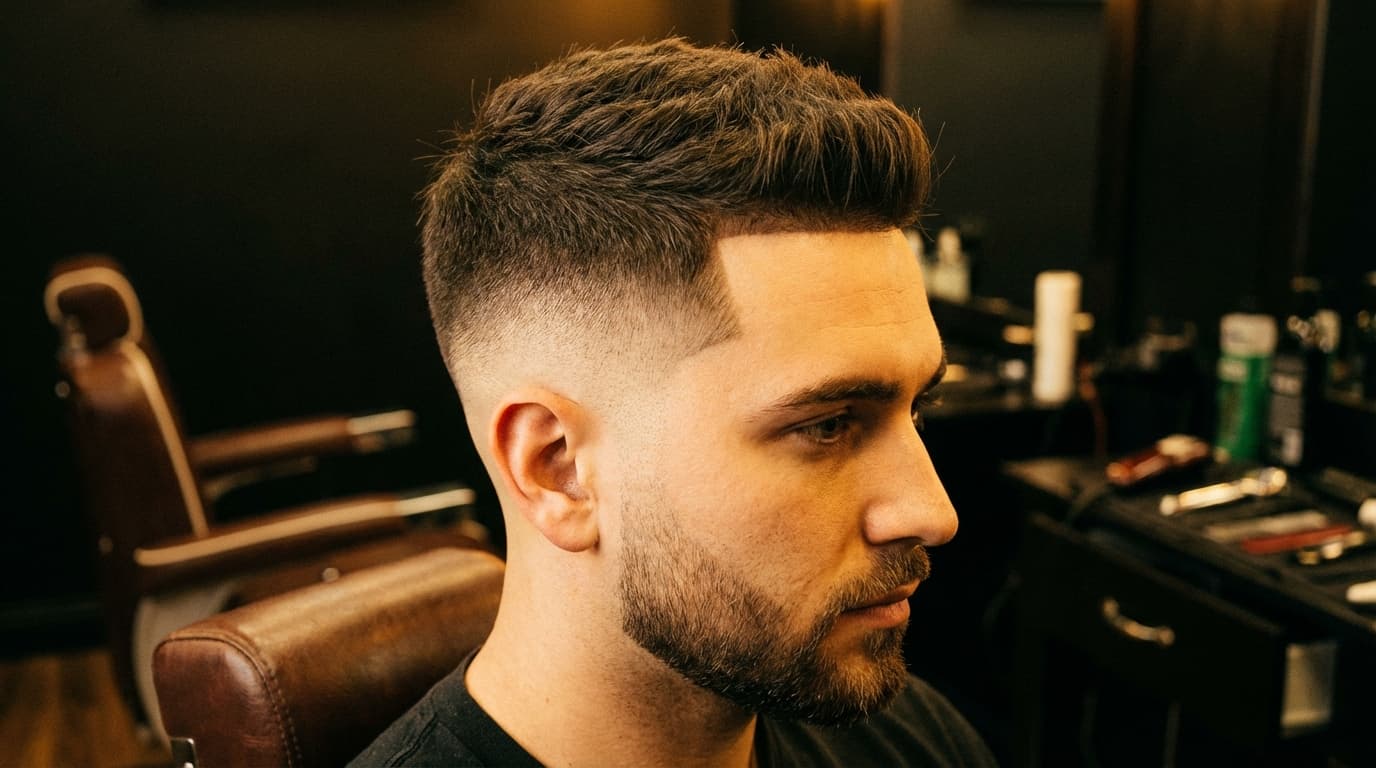
What Is a Low Taper Fade?
A low taper fade is a haircut where the hair gradually shortens from longer on top to shorter at the sides and back, with the fade starting just above the ears and tapering down to the skin at the neckline. Unlike a high fade that starts near the temples or a mid fade that begins at the ear line, the low taper keeps more hair on the sides, creating a subtle and clean transition.
The key word is gradual. A taper fade is not a hard line or a sudden drop-off. It is a smooth gradient from your longer hair to shorter hair, blending seamlessly into the skin. The "low" part means this transition happens in the lowest third of the sides, roughly from the top of the ear down to the hairline.
This is one of the most requested haircuts at barbershops in 2026, and for good reason. It is versatile enough to work with nearly every hair type, face shape, and personal style — from corporate environments to streetwear looks. Whether you pair it with a textured crop on top, slicked-back hair, or natural curls, the low taper fade provides a clean foundation.
Low Taper Fade vs Other Fade Types
Understanding the differences between fade types saves you from walking out of the barbershop with the wrong haircut. Here is what separates them:
Low Taper Fade
Where it starts: Just above the ear, fading down to the neckline.
Best for: Conservative environments, first-time fade wearers, and anyone who wants a clean look without too much skin showing. It is the most versatile and forgiving fade type.
Maintenance: Every 2-3 weeks for a sharp look. Can stretch to 4 weeks before it looks grown out.
Mid Fade
Where it starts: At the ear line, roughly halfway up the sides.
Best for: A balanced look that shows more scalp than a low taper but is not as dramatic as a high fade. Works well with longer styles on top.
Maintenance: Every 2-3 weeks. Grows out faster than a low taper.
High Fade
Where it starts: Above the temples, near the top of the head.
Best for: Bold, high-contrast looks. Popular with buzz cuts, flat tops, and very short styles. Shows significant scalp.
Maintenance: Every 1-2 weeks to maintain the sharp contrast.
Skin Fade (Bald Fade)
Where it starts: Can be low, mid, or high — the distinction is that it fades all the way down to the skin (zero guard) rather than leaving short stubble.
Best for: Maximum contrast and a very clean, precise look. Requires a skilled barber.
Maintenance: Weekly for the cleanest look.
Taper vs Fade: The Actual Difference
People use these terms interchangeably, but technically a taper gradually reduces hair length without necessarily reaching the skin. A fade takes the hair down to the skin (or very close to it). A taper fade combines both — it tapers the hair length and fades into the skin at the very bottom.
In practice, when you ask for a "low taper fade," most barbers understand you want a gradual shortening that fades to skin at the hairline. But it helps to be specific about how much skin you want showing.
Which Face Shapes Does the Low Taper Fade Suit?
The low taper fade works with every face shape, but the way you style the hair on top makes the difference between a good haircut and a great one.
Oval Face
Almost anything goes. The low taper fade with a textured crop, side part, or pompadour all look excellent. The balanced proportions of an oval face mean you do not need to compensate with volume or width. Play freely with the top length and style.
Best pairing: Textured crop or classic side part.
Round Face
The low taper fade is excellent for round faces because the shorter sides create vertical emphasis that elongates the face. Pair it with added height on top — a quiff, pompadour, or textured spike — to counterbalance the width.
Best pairing: Pompadour or quiff with medium-length top.
Avoid: Leaving too much length on the sides (defeats the slimming effect).
Square Face
Square faces have strong jawlines that pair naturally with the clean lines of a taper fade. You can go either way: a shorter, more angular style on top that complements the jaw structure, or a longer, textured style that softens it.
Best pairing: Textured crop or brush-back with medium hold.
Heart-Shaped Face
The low taper fade works well because it does not add width to the already-wider forehead. Keep the top at medium length with some texture or a side part that adds soft asymmetry. Avoid spiky or very voluminous styles on top that exaggerate the forehead width.
Best pairing: Side part or layered fringe.
Oblong (Long) Face
Be cautious with too much height on top, which can make a long face appear even longer. The low taper fade is still a solid choice — just pair it with a shorter top length or a fringe that breaks up the vertical line. A textured crop that lies flatter works better than a tall pompadour.
Best pairing: Textured crop with fringe or French crop.
Avoid: High-volume pompadours or tall quiffs.
For a complete face shape guide, read our best hairstyle for your face shape article where we cover how to measure your face and match it to the right cut.
What Would I Look Like With a Low Taper Fade?
A low taper fade changes the outline of your face more than the top of your hair. It cleans up the ears, neckline, and sideburns while leaving enough weight on the sides that the cut still feels natural. That is why it is easier to wear than a high fade and safer if you are trying a fade for the first time.
Here is the quick self-check:
- If your face is round, keep the sides tight and add a little height or texture on top.
- If your face is square, use a textured top so the fade does not make the overall shape too boxy.
- If your face is oblong, avoid tall styling on top and pair the taper with a fringe or crop.
- If your face is heart-shaped, keep the fade low and avoid exposing too much forehead with a slicked-back top.
- If your face is oval, almost every low taper variation is safe.
The easiest way to know is to preview it. Upload a selfie, try a low taper fade on your own face, and compare it against a textured crop, side part, or buzz cut before you book.
Low Taper Fade by Hair Type
Straight Hair
Straight hair creates the cleanest taper fade because the hair lies flat and transitions smoothly. The gradient from long to short is very visible and precise. Straight hair also holds side parts and slick-back styles well with a taper fade.
Tip: Use a matte pomade or clay for texture on top. Straight hair can look too flat without product.
Wavy Hair
Wavy hair adds natural texture that makes the low taper fade look effortlessly stylish. The waves on top create movement and volume without product, while the faded sides keep everything clean.
Tip: Let the natural wave work for you. A sea salt spray enhances the texture. Avoid fighting the wave pattern — work with it.
Curly Hair
The low taper fade with curly hair is one of the most popular combinations in 2026. The contrast between defined curls on top and clean faded sides is striking. The key is making sure your barber understands curly hair shrinkage — curls look shorter than they are when dry.
Tip: Ask your barber to cut the top while it is dry so the length is accurate. Use a curl cream or defining gel to keep the curls shaped.
Coily / Afro-Textured Hair
Taper fades are a staple for coily hair textures. The low taper creates a clean frame around natural texture, and the fade can be as subtle or dramatic as you want. Popular combinations include the low taper with a high-top, twist-out, or shaped afro.
Tip: A skilled barber who works with your texture regularly is essential. The fade needs to account for the hair's natural curl pattern and density.
How to Ask Your Barber for a Low Taper Fade
Walking into the barbershop with the right vocabulary makes a massive difference. Here is exactly what to communicate:
The basics to specify:
"Low taper fade on the sides and back" — This tells them the fade starts above the ears, not higher.
"Fade to skin / Fade to a 0 / Leave some stubble" — Specify whether you want the bottom to go to bare skin or leave a little length.
"[X] inches on top" or "finger-length on top" — Be specific about the top length. Bring reference photos.
"Blend into the top gradually" — Ensures a smooth transition, not a hard line between the faded sides and the longer top.
"Clean up the neckline" — Squared, rounded, or tapered. Most barbers will taper by default, but specify if you have a preference.
Reference photos are your best friend
Bring 2-3 photos showing the fade you want. Show your barber from the side, back, and front if possible. This eliminates 90% of miscommunication.
What NOT to say
- "Just clean it up" — Too vague. You might get a different cut every time.
- "A medium fade" — This means different things to different barbers. Use low/mid/high.
- "Like the guy on TikTok" — Always have the actual photo saved.
Styling a Low Taper Fade: Products and Techniques
The sides take care of themselves — that is the beauty of a fade. Styling is all about the top.
For a textured, messy look:
- Towel-dry hair until damp
- Work a small amount of matte clay or paste through the top
- Use your fingers to push hair in different directions for texture
- Let it air dry or use a blow dryer on low heat
For a slicked-back or side part:
- Apply pomade or gel to damp hair
- Comb hair back or to the side
- Use a blow dryer on medium heat, following the direction you want the hair to lay
- Finish with a light-hold hairspray if needed
For curly or wavy tops:
- Apply curl cream or defining gel to wet hair
- Scrunch curls upward to encourage definition
- Diffuse with a blow dryer or air dry
- Do not touch the curls while they dry — this prevents frizz
Maintaining Your Low Taper Fade
A fresh taper fade looks amazing, but it does not stay that way on its own. Here is a realistic maintenance schedule:
- Week 1-2: The fade looks sharp. Minimal maintenance needed.
- Week 2-3: The fade starts to grow out. Still looks clean but less defined.
- Week 3-4: Time for a touch-up. The gradient is noticeably less precise.
- Beyond 4 weeks: The taper has grown out significantly. Most people get a fresh cut by now.
Budget planning: If you get a taper fade every 3 weeks, that is roughly 17 cuts per year. Factor that into your grooming budget.
Between cuts: Keep the neckline clean with a trimmer if you know how. Most barbers offer a quick "line-up" between full cuts for a lower price.
Low Taper Fade Variations to Try
Low Taper Fade + Textured Crop
The most popular pairing in 2026. Short, textured hair on top with a clean low fade. Minimal styling required, works for every face shape, and looks good growing out.
Low Taper Fade + Pompadour
Classic meets modern. The volume on top creates height, while the clean sides add contrast. Works especially well for round faces that benefit from vertical emphasis.
Low Taper Fade + Curly Top
Let your natural curls shine on top while the fade frames them. One of the most striking contrasts in men's hair right now.
Low Taper Fade + Side Part
Timeless and professional. A hard or soft side part with a low taper fade works in any setting — office, date night, or weekend.
Low Taper Fade + Fringe
A fringe (or bangs) falling over the forehead paired with a low taper on the sides. Great for oblong faces that need to shorten the visual length, or for anyone who likes the texture-forward trend.
Low Taper Fade + Beard
The low taper can connect seamlessly into a beard when done by a skilled barber. This creates a continuous line from the hair through the sideburns into the beard, giving a very polished look.
Try It Before You Commit
Not sure if a low taper fade is right for your face? You do not have to guess. Upload a selfie to MyNewHaircuts and see yourself with a taper fade in seconds. Our AI analyzes your face shape and generates a photorealistic preview so you know exactly what to expect before you sit in the chair.
It is free to try — no signup, no commitment, just a quick preview that could save you from a haircut you regret.
Frequently Asked Questions
Is a low taper fade good for a round face?
Yes. The low taper fade is one of the best fade types for round faces because the shorter sides create vertical emphasis that elongates the face. Pair it with added height on top — a quiff, pompadour, or textured crop — to counterbalance the roundness. The gradual transition of a taper (versus a harsh high fade) keeps the look balanced rather than extreme.
How often should I get a low taper fade touched up?
Most people get a touch-up every 2-3 weeks to keep the fade looking sharp. You can stretch it to 4 weeks if you do not mind a slightly grown-out look. The lower the fade, the more forgiving it is as it grows out compared to a high fade that shows regrowth quickly.
What is the difference between a taper and a fade?
A taper gradually reduces hair length from long to short but does not necessarily reach the skin. A fade takes the hair all the way down to the skin (or nearly skin) at its shortest point. A taper fade combines both — it tapers the length and fades to skin at the very bottom. In practice, most barbers understand "low taper fade" to mean a gradual shortening that fades close to skin at the hairline.
Can I get a low taper fade with curly hair?
Absolutely. The low taper fade with curly hair on top is one of the most popular combinations right now. The contrast between defined curls and clean faded sides looks striking. The key is finding a barber experienced with your curl type and cutting the top while dry (curly hair shrinks when it dries, so wet-cutting can result in the top being shorter than intended).
How do I ask my barber for a low taper fade?
Say "low taper fade on the sides and back" and specify whether you want the bottom to fade to skin or leave some stubble. Tell them how much length you want on top (in inches or finger-widths) and whether you want a hard part, soft blend, or specific style. Always bring 2-3 reference photos showing the side and back views of the fade you want.
Is a low taper fade professional enough for work?
The low taper fade is one of the most work-appropriate fade styles because it is subtle. The gradual transition and the fact that it keeps more hair on the sides compared to mid or high fades makes it look polished rather than edgy. Pair it with a side part or brush-back for the most professional look.
Related Guides
- Best Hairstyle for Your Face Shape — find your face shape first
- Men's Haircut Trends 2026 — see all trending men's styles
- What Haircut Should I Get? — the complete decision guide
- Best Haircuts for Round Faces — round face specific recommendations
- Best Haircuts for Square Faces — square face specific guide
- Best Haircuts for Oval Faces — oval face recommendations
- Best Haircuts for Heart-Shaped Faces — heart face guide
- Best Haircuts for Oblong Faces — oblong face guide
- Textured Crop Guide — the modern men's classic
- How to Talk to Your Barber — get exactly what you want
Choose a Look for Your Next Appointment
Upload your selfie to see a suggested haircut on your face. Compare the shape before discussing the details with your barber.
Try Your New Haircut Now