Best Haircuts for Square Faces: Soften or Sharpen Your Jawline (2026)
Jump to a section
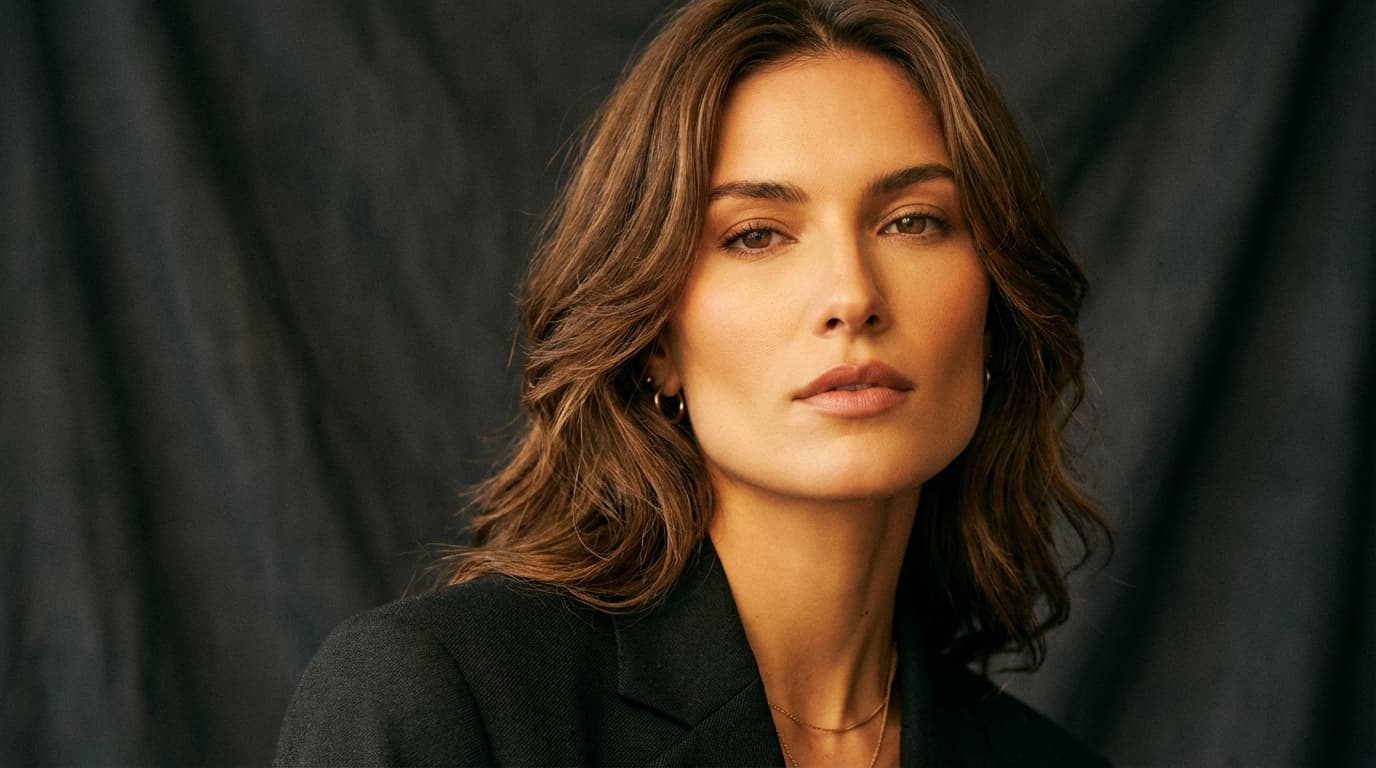
A square face is one of the most striking face shapes out there. Strong jawline, defined angles, natural symmetry - these are features that models and actors are known for. But when it comes to haircuts, all that angularity can work against you if you choose a style that amplifies the sharpness instead of balancing it.
The core principle for square faces is simple: soften the angles without hiding the structure. You want a haircut that introduces texture, movement, and subtle roundness to complement your naturally strong bone structure - not fight it.
If you are not sure whether your face is actually square, start with our complete guide on the best hairstyle for your face shape to identify your shape first.
Understanding the Square Face Shape
The best hairstyles for square faces soften the strong jawline and angular forehead with texture, layers, and movement. For men, textured crops, quiffs, and side parts work best. For women, soft waves, side-swept bangs, and layered lobs add the curves needed to complement a square face's strong bone structure.
A square face has a few defining characteristics:
- Forehead and jaw are roughly the same width. Unlike a heart shape (wider forehead) or triangle (wider jaw), a square face is balanced top to bottom.
- Strong, angular jawline. This is the signature feature. Your jaw has a clearly defined angle near the ears rather than curving softly.
- Straight sides. The sides of your face run nearly vertical from your temples to your jaw, with minimal tapering.
- Broad forehead. Your forehead is wide and often appears flat across the top, matching the width of your jaw.
- Prominent chin. Square faces tend to have a strong, sometimes flat chin rather than a pointed or rounded one.
These features are an asset. Square faces photograph well and project confidence and strength. The goal with your haircut is to introduce enough softness and movement to prevent the overall look from feeling too rigid or boxy.
The Goal: Soften Without Hiding
Every recommendation in this guide comes back to one core principle: add texture and softness to balance the angles, not mask them.
Here is why that matters. A square face already has strong geometric lines. If you choose a haircut that adds more straight, blunt lines - like a flat-topped buzz cut or a one-length bob with no movement - you double down on the boxiness. Your face looks wider, more rigid, and less dynamic.
Instead, you want styles that:
- Introduce texture and movement - messy, layered, or wavy styles break up the hard lines of your jaw and forehead
- Add softness around the edges - face-framing layers, side-swept elements, and wispy ends counterbalance angular features
- Create height or volume on top - drawing the eye upward shifts focus away from the broad jawline
- Use asymmetry strategically - off-center parts and uneven lengths prevent the cut from mirroring your face's natural symmetry
Keep these principles in mind as you read through the specific styles below. Once you understand the reasoning, you can adapt any trend to work with your bone structure.
How to Know If You Have a Square Face
Not sure if your face is actually square? Here is a quick test:
- Pull your hair back completely so your full face shape is visible.
- Look in a mirror straight on, at eye level.
- Compare forehead and jaw width. If your forehead and jaw are approximately the same width, that is a strong square face indicator. Heart and oval shapes taper noticeably at the jaw.
- Check your jaw angle. Feel along your jawline near your ears. If there is a distinct, sharp angle rather than a smooth curve, you are likely square.
- Look at your overall proportions. If your face appears roughly as wide as it is long with minimal curvature on the sides, square is your shape.
Still uncertain? You can upload a selfie and try different haircuts with our AI tool to see which shapes actually look best on you - no guessing required.
For a more detailed breakdown of all face shapes and what works for each, check out what haircut should I get.
Best Haircuts for Square-Faced Men
The goal for men with square faces is straightforward: introduce texture and softness on top while keeping enough length to break up the angular silhouette. Here are the best options.
1. Textured Crop
Why it works: A textured crop adds messy, choppy movement across the forehead and crown. This irregular texture contrasts with the hard lines of a square jaw, creating visual balance. The fringe softens the broad forehead without covering it entirely.
What to tell your barber: Ask for a textured crop with 2-3 inches on top, point-cut or razor-cut for maximum choppiness. Sides can be a mid fade or scissor-cut taper. The fringe should be uneven and slightly longer than a standard crop - you want it to break up the forehead, not sit flat.
Styling tip: Apply a matte paste or clay to towel-dried hair and use your fingers to push the top in different directions for a deliberately messy finish. Avoid combing it flat.
2. Quiff
Why it works: The quiff adds height and volume at the front, which draws the eye upward and away from the strong jawline. This vertical lift elongates the face slightly, softening the boxy proportions without losing the masculine structure that a square face naturally provides.
What to tell your barber: Request 3-4 inches on top with the front section as the longest point. A gradual fade or taper on the sides works best - avoid a harsh disconnected undercut, which adds more hard lines. Ask for some texture through the top rather than blunt-cut layers.
Styling tip: Blow-dry the front upward and slightly back, using a round brush for volume at the roots. Finish with a light-hold product. The quiff should look full but not sculpted - a little movement keeps it from competing with your angular features.
3. Side Part
Why it works: A classic side part introduces asymmetry that breaks up the natural symmetry of a square face. The diagonal line of the part and the uneven weight distribution on each side counteract the balanced, boxy structure. It is timeless, professional, and flattering.
What to tell your barber: Ask for a traditional side part with 3 inches on top and a taper on the sides. The part should sit about an inch above your temple on your dominant side. Keep the sides neat but not buzzed - some length at the temples softens the overall look.
Styling tip: Use a comb to establish the part on damp hair, then blow-dry in place. Finish with a medium-hold pomade or cream. Let a few pieces on top fall slightly out of place for a natural feel - too much precision emphasizes the squareness.
4. Crew Cut
Why it works: A crew cut works with a square face rather than against it. It keeps things clean and tight while the slightly longer top section maintains just enough texture to prevent the flat, boxy look. If you have a strong jaw, a crew cut showcases it without apology.
What to tell your barber: Ask for a classic crew cut with about 1-2 inches on top, gradually tapering to shorter sides and back. The front should be the longest point, giving you the option to push it up slightly. Avoid going too short on top - you need that bit of length for texture.
Styling tip: Work a small amount of matte clay through the top with your fingers, pushing slightly upward and to one side. Even this minimal texture makes a difference in breaking up the flat plane across the top of your head.
5. Curtain Hair
Why it works: Curtain hair parts in the middle or slightly off-center and falls on both sides of the forehead. Those two soft panels frame the face and cover the corners of the broad forehead, which are the sharpest points of a square face. The result is a softer, more balanced silhouette.
What to tell your barber: Ask for 4-6 inches on top with shorter sides (tapered, not buzzed). The top should be layered so it falls naturally to either side when parted. The fringe pieces need enough weight to drape but not so much that they look heavy or blunt.
Styling tip: Blow-dry with a round brush, directing each side away from the center part. Let the ends curve slightly inward toward your cheeks. A light sea salt spray adds texture and movement that keeps the style looking effortless rather than styled.
6. Messy Fringe
Why it works: A messy fringe covers the broad forehead with deliberately undone, textured bangs. The irregularity of the fringe creates soft lines that contrast sharply with the hard angles of your jaw. It is one of the most effective ways to soften a square face without sacrificing edge.
What to tell your barber: Request a fringe that falls to about eyebrow length, cut with a razor or point-cut for a choppy, uneven finish. The top should be 3-4 inches with texture throughout. Sides can be faded or tapered depending on your preference.
Styling tip: Apply a texturizing spray to damp hair, scrunch the fringe with your fingers, and let it air-dry. The goal is controlled chaos - it should look like you woke up this way. Avoid blow-drying it flat against your forehead.
Best Haircuts for Square-Faced Women
Women with square faces have a wider range of lengths and styles to work with, but the same principles apply: introduce softness, movement, and texture to balance the strong angular features.
1. Long Layers with Soft Waves
Why it works: Long layers that start below the chin create gentle, flowing lines that contrast with the hard angles of a square jaw. Adding soft waves introduces curvature that a square face does not naturally have. The overall effect is a more oval appearance - the most universally flattering face shape.
Styling tip: Ask your stylist for layers that begin at chin length or longer - never at jaw level, which would draw a line right at your widest angular point. Use a large-barrel curling iron to create loose, S-shaped waves starting from the mid-lengths. Focus on movement, not ringlets.
2. Side-Swept Bangs
Why it works: Side-swept bangs create a strong diagonal line across the forehead that breaks up the horizontal width of a square face. The sweep draws the eye along an angle rather than across, counteracting the boxy proportions at the top of your face. For a deeper dive into whether bangs are right for your face, read our guide on should I get bangs.
Styling tip: Ask for bangs cut on a long diagonal, starting shorter near the part and sweeping to cheekbone length or longer on the other side. Blow-dry them with a round brush in the direction of the sweep. Keep them wispy at the ends rather than blunt - the softness is what makes this work for square faces.
3. Long Bob (Lob) with Texture
Why it works: A lob that hits just past the collarbone is long enough to extend below the jawline, avoiding the trap of cutting off right at the jaw. Adding texture through waves, layers, or a slightly messy finish introduces the movement that square faces need to soften their natural geometry.
Styling tip: Part it to one side for asymmetry. Add loose, beachy texture with a flat iron or curling wand, alternating directions for a natural look. Keep it slightly undone - a perfectly styled, smooth lob can look too structured on a square face.
4. Beach Waves
Why it works: Beach waves are essentially the antithesis of a square face - all soft curves, irregular texture, and effortless movement. The waves create rounded shapes around the face that balance the straight lines and sharp angles of your bone structure. This works at almost any length from a lob to waist-length.
Styling tip: Use a sea salt spray on damp hair and scrunch with your hands, or wrap random sections around a curling wand in alternating directions. The key word is "imperfect." Uniform, perfectly formed curls will look too structured. You want loose, undone waves that add natural-looking softness.
5. Curtain Bangs
Why it works: Curtain bangs sweep outward from a center or off-center part, creating two soft arcs that frame the forehead and upper face. These arcs disguise the sharp corners of a square forehead and introduce rounded lines where your face has the most angularity. Paired with longer hair, they create a beautifully balanced look.
Styling tip: Ask for curtain bangs that are shortest at the center (around eyebrow length) and longest at the outer edges (cheekbone to jaw length). Blow-dry each side away from center using a round brush, curving the ends slightly outward. Keep them on the wispier side - heavy curtain bangs can look blunt on a square face.
6. Shag Cut
Why it works: A shag cut is built on layers, texture, and movement - exactly what square faces need. The heavily layered structure creates a soft, lived-in frame around the face that disguises angular features. The intentional messiness of a shag provides constant visual movement that prevents the eye from fixating on your jaw or forehead.
Styling tip: Ask your stylist for lots of layers starting from the cheekbones down, with a feathered or curtain fringe. Style with a diffuser for volume and texture, or air-dry with a texturizing product. The less polished, the better - shags are meant to look effortless.
7. Pixie with Soft Fringe
Why it works: A pixie cut on a square face works when you keep softness at the top and around the forehead. A soft, wispy fringe - whether side-swept or gently layered across the forehead - breaks up the strong horizontal line of a broad forehead and introduces the texture that short hair needs to balance angular features. Curious about going short? Check our guide on what would I look like with short hair.
Styling tip: Ask for a pixie with 2-3 inches on top and a soft, textured fringe rather than a blunt one. The sides should be short but not buzzed - some softness at the temples prevents the cut from looking too severe against strong cheekbones. Style with a light wax or texturizing cream, pushing the fringe slightly to one side.
Square Face Haircut Cheat Sheet
| Style | Gender | Why It Works | What to Tell Your Stylist |
|---|---|---|---|
| Textured crop | Men | Soft texture offsets angular jaw | "Textured and messy on top" |
| Quiff | Men | Height balances strong jawline | "Volume and movement on top" |
| Side part | Men | Asymmetry softens angles | "Classic side part, medium length" |
| Soft waves | Women | Curves counteract angular features | "Loose waves with movement" |
| Side-swept bangs | Women | Diagonal line softens forehead | "Swept to one side, not too thick" |
| Layered lob | Women | Layers add softness around jaw | "Layered lob with face-framing pieces" |
Styles to Avoid with a Square Face
Knowing what to avoid is just as important as knowing what works. These styles tend to amplify the boxy, angular appearance of a square face:
- Blunt bobs at jaw level. A straight-across bob that terminates right at the jaw draws a hard horizontal line at the widest, most angular part of your face. This is the number one mistake for square faces.
- Slicked-back tight styles. Pulling hair back flat against the head with no volume or texture exposes every angle without any softening element to balance it.
- Very short buzz cuts. Without any hair to create softness, a buzz cut leaves the square shape fully exposed. The result is a head-and-face silhouette that looks like a rectangle.
- Center-parted flat hair. A center part with straight, flat hair on each side creates two identical vertical panels that mirror your face's symmetry. This reinforces the boxy shape rather than breaking it up.
- One-length cuts with no layers. Hair that is all one length hangs flat and adds no movement, texture, or visual interest to counteract your angular features.
The general rule: if a style adds hard lines, emphasizes symmetry, or removes all texture and movement, it is working against your face shape.
The AI Advantage: Try Before You Commit
Reading about haircuts is useful. Actually seeing them on your face is transformative.
The challenge with a square face is that small differences matter. A fringe that is too blunt will emphasize your angles. Layers that start at the wrong point will draw attention to your jaw instead of softening it. These are details that are almost impossible to judge from photos of other people.
That is exactly what our AI hairstyle tool is built for. Upload a selfie and preview any of these styles on your actual face in seconds. Test whether a textured crop or messy fringe works better for your features. See how side-swept bangs change your proportions. Confirm that a shag cut is the right move before you commit to the chair.
No guessing. No regret cuts. Just clarity about what actually works for your specific face.
Try it now - it takes 30 seconds.
Related Face Shape Guides
- Best Hairstyle for Your Face Shape — the complete guide
- Best Hairstyles for Oval Faces
- Best Haircuts for Round Faces
- Best Hairstyles for Heart-Shaped Faces
- Best Hairstyles for Oblong Faces
- Best Hairstyles for Thin Hair
- Should I Get Bangs?
- What Haircut Should I Get?
- What Would I Look Like With Short Hair?
- Men's Hairstyle Trends 2026
- Women's Haircut Trends 2026
- Low Taper Fade Guide — clean fade option for square faces
- Butterfly Cut Guide — softens strong angles
- Hair Transformation Ideas — planning a bigger change?
- How to Choose a Hairstyle — the systematic method
- Wolf Cut Guide — the trending layered mullet hybrid
- Pixie Cut Guide — pixie styles for every face shape
- Layered Haircut Guide — layers explained by face shape
Final Thoughts
The best haircut for a square face is any style that introduces texture, softness, and movement to balance your naturally strong features. For men, that means textured tops, strategic fringe, and avoiding overly sharp or flat cuts. For women, it means layers, waves, soft bangs, and lengths that extend past the jaw.
But every face is unique. Your specific proportions, hair texture, and personal style all factor in. The styles in this guide are proven starting points, but the best way to know for sure is to see them on yourself before you decide.
Choose a Look for Your Next Appointment
Upload your selfie to see a suggested haircut on your face. Compare the shape before discussing the details with your barber.
Try Your New Haircut Now