Best Haircuts for Heart-Shaped Faces: Styles That Balance Your Features
Jump to a section
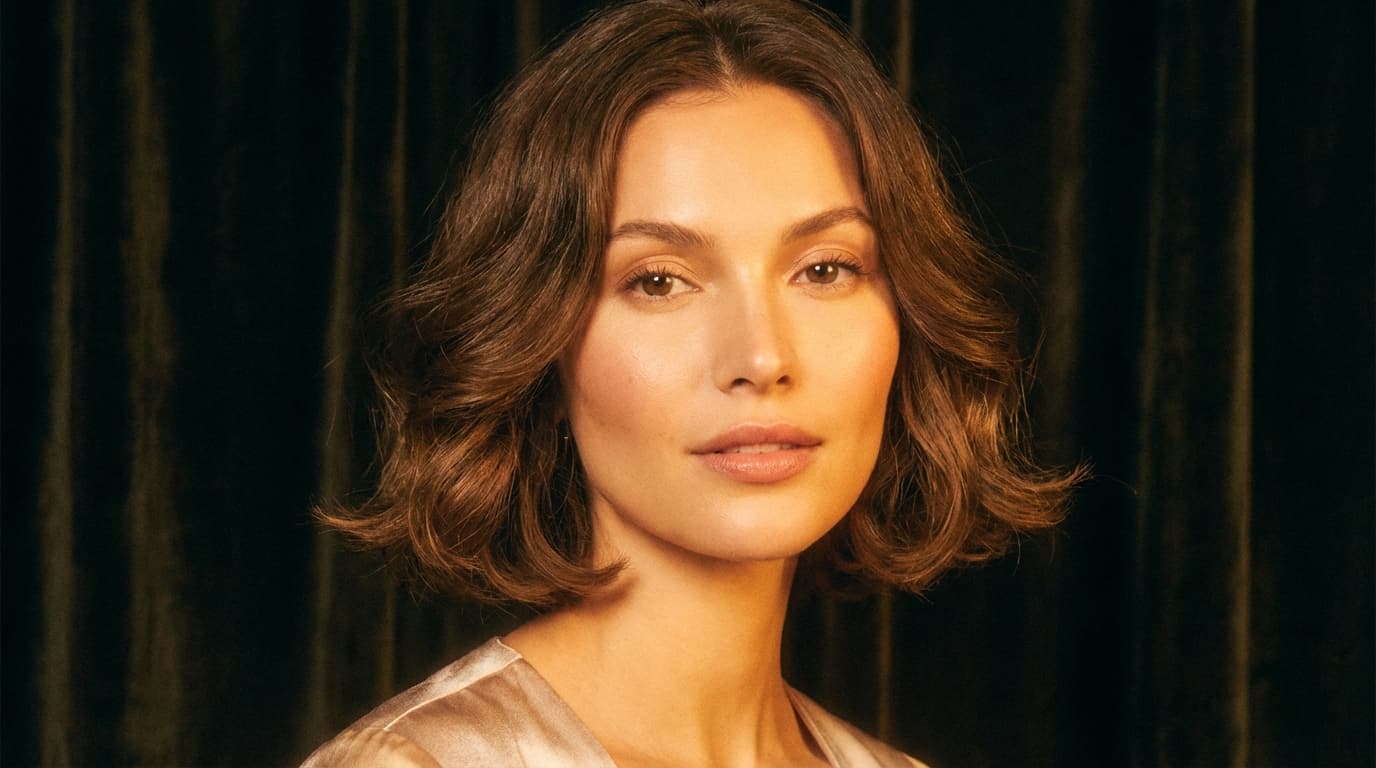
A heart-shaped face is sometimes called the "inverted triangle" - wide at the forehead, tapering to a narrow chin and pointed jawline. It is one of the most distinctive face shapes, and it comes with a clear challenge: the top half of your face carries more visual weight than the bottom half. The wrong haircut amplifies that imbalance. The right one corrects it entirely.
The core principle for heart-shaped faces is straightforward: add width and volume at the jaw level while softening the forehead. Every style recommendation in this guide comes back to that idea. If you are not sure whether you have a heart face or something else, start with our complete guide on the best hairstyle for your face shape to confirm your shape before committing to a cut.
Understanding the Heart Face Shape
Heart-shaped faces need haircuts that balance a wider forehead with a narrower chin. The best approach is to minimize volume at the top and add width around the jawline. For men, curtain hair and textured fringes work best. For women, chin-length bobs and curtain bangs create the ideal balance between forehead and chin.
A heart-shaped face has several defining features:
- Wide forehead. The forehead is the widest part of the face, noticeably broader than the jawline.
- High, prominent cheekbones. They sit high on the face and contribute to the wide upper half.
- Narrow jaw tapering to a point. The jawline narrows significantly as it moves toward the chin.
- Pointed chin. The chin is the narrowest part of the face, sometimes quite sharp.
- Widow's peak is common. Many heart-shaped faces have a V-shaped hairline at the center of the forehead, though not all.
None of these features are flaws. Heart-shaped faces are often described as striking and photogenic - the combination of prominent cheekbones and a defined chin creates a naturally expressive look. But when choosing a haircut, you need to work with the top-heavy proportions rather than ignoring them. A cut that works beautifully on a round or oval face might look completely wrong on a heart shape, and vice versa.
The Goal: Balance Top and Bottom
Every recommendation in this guide is built on one principle: reduce the visual dominance of the forehead and add volume or width at the jawline.
Here is what that means in practice:
- Add width at or below the jaw. Styles that create fullness around the chin and jaw counterbalance the wider forehead. Chin-length cuts, flipped-out ends, and waves that start at the jawline all do this.
- Soften the forehead. Bangs, curtain fringe, and side-swept styles partially cover the forehead, reducing its visual footprint without hiding it entirely.
- Avoid top-heavy styles. Anything that adds volume or height at the crown while keeping the bottom tight will exaggerate the inverted triangle shape. You want the opposite effect.
Keep these principles in mind as you read through the specific cuts below. Once you understand the reasoning, you can evaluate any hairstyle trend through this lens - not just the ones listed here.
How to Know If You Have a Heart-Shaped Face
Not sure if your face is truly heart-shaped? Here is a quick self-test:
- Pull your hair back so your full face shape and hairline are visible.
- Look in a mirror straight on at eye level.
- Compare your forehead to your jawline. If your forehead is noticeably wider than your jaw, that is the first indicator.
- Check your chin. If your jaw narrows to a distinct point rather than curving gently (round) or forming a flat edge (square), you are likely heart-shaped.
- Look at your hairline. A widow's peak is a strong supporting clue, though not required.
If your forehead is the widest point and your face tapers consistently to a narrow chin, you have a heart-shaped face.
A common confusion is between heart and oval. The difference: an oval face has a forehead and jaw that are roughly the same width, while a heart face has a forehead that is clearly wider. If your jaw is noticeably narrower than your forehead, heart is your shape.
Still second-guessing? You can try different haircuts with our AI tool to see which styles actually flatter your proportions. Our guide on what haircut should I get also walks through every face shape in detail.
Best Haircuts for Heart-Faced Men
The goal for men with heart-shaped faces is to soften the wide forehead and avoid emphasizing the narrow chin. That usually means some length on top that falls forward or to the side, combined with styles that add visual weight below the temples. Tight fades and buzzed sides can work, but only when the top provides enough coverage and texture to keep the proportions balanced.
1. Curtain Hair
Why it works: Curtain hair parts in the middle and falls on both sides of the forehead, which directly addresses the heart face's biggest challenge. The two panels of hair reduce the visible width of the forehead while the longer pieces frame the face and draw attention downward past the cheekbones.
What to tell your barber: Ask for at least 5-6 inches on top with a center part. The sides should be medium length - not buzzed tight - so the transition from top to sides looks natural rather than creating a sharp contrast that emphasizes forehead width.
Styling tip: Blow-dry each side away from the center, curving slightly outward. Use a texturizing spray for hold without stiffness. The goal is relaxed and face-framing, not stiff or overly structured.
2. Textured Fringe
Why it works: A textured fringe falls forward across the forehead, breaking up its width with choppy, uneven pieces. The texture prevents the fringe from looking like a heavy curtain and instead creates a soft, dimensional effect that reduces forehead dominance. It is one of the most effective and low-effort cuts for heart faces.
What to tell your barber: Ask for a textured crop with a longer, choppier fringe at the front - about 2-3 inches. The fringe should be point-cut or razor-cut for movement rather than cut blunt and straight across. Sides can be a mid fade or tapered.
Styling tip: Work a matte clay through the fringe and push it forward and slightly to one side. The pieces should look natural and broken up, not combed flat against your forehead.
3. Side Part with Medium Length
Why it works: A side part creates asymmetry that breaks up the heart face's symmetrical taper. The hair sweeps across the forehead at a diagonal, covering more of the wider side while the parting creates a natural break. Medium length (3-4 inches on top) gives you enough hair to create width at the temples without piling height at the crown.
What to tell your barber: Ask for a classic side part with medium length on top and a gradual taper on the sides - not a hard disconnect. The longer hair should be able to sweep naturally from the part across the forehead.
Styling tip: Find your natural part by combing wet hair forward and letting it fall. Use a lightweight pomade to set the sweep and keep a relaxed finish. Avoid slicking it tight - you want some volume at the sides to balance the narrow jaw.
4. Messy Quiff
Why it works: A quiff adds height at the front, which might sound counterproductive for a wide forehead. But the key word is "messy." A textured, loosely styled quiff adds dimension and movement rather than a solid block of volume. The soft texture at the top combined with some length at the sides avoids the top-heavy look that a tight, sculpted quiff would create.
What to tell your barber: Ask for 3-4 inches on top, slightly longer at the front, with textured layering. Sides should be tapered but not aggressively faded - a #3 or #4 guard that blends into the top naturally.
Styling tip: Blow-dry upward at the roots for lift, then use your fingers (not a comb) to push the front up and slightly to one side. Finish with a light-hold paste. The less structured it looks, the better it works on a heart face.
5. Wolf Cut
Why it works: The wolf cut's heavy layering creates volume and width at the bottom of the style - exactly where heart-shaped faces need it. The shorter layers on top blend into longer, fuller pieces around the ears and neck, which visually fills out the narrow lower face. It is a trending cut that happens to solve the heart face's core problem.
What to tell your barber: Ask for a wolf cut with heavy layers throughout, longest at the back and sides (touching the collar), and shorter choppy layers at the crown. Face-framing pieces should start at the cheekbone and get longer as they move down.
Styling tip: Scrunch with a sea salt spray while air-drying for maximum texture. The volume should live in the mid-lengths and ends, not at the roots. Avoid blow-drying the crown upward.
6. Medium-Length Waves
Why it works: Natural or styled waves create organic width around the face, and when the hair is medium length (ear to collar), that width falls right where heart-shaped faces need it most - at and below the jawline. Waves also soften the overall look, which counteracts the angularity of a pointed chin.
What to tell your barber: Ask for medium-length hair (4-6 inches) with light layering to encourage wave formation. Avoid heavy thinning - you want the fullness.
Styling tip: If your hair is naturally wavy, lean into it with a curl-enhancing cream and air-dry. If it is straight, use a sea salt spray and scrunch while drying, or wrap sections around a 1-inch curling iron loosely. Focus the wave from the ears down.
Best Haircuts for Heart-Faced Women
Women with heart-shaped faces have the same goal: soften the forehead and add visual weight at the jawline and below. The wider range of lengths and styling options gives you plenty of ways to achieve this. The key is choosing where volume lives in the style - you want it at the bottom, not the top.
1. Chin-Length Bob
Why it works: A chin-length bob adds width precisely where a heart face is narrowest. The blunt or slightly angled ends at the jawline create a horizontal line that balances the wider forehead above. This is one of the most targeted and effective cuts for heart-shaped faces.
Styling tip: Add a slight outward flip at the ends with a round brush or flat iron to maximize width at the jaw. A center part or soft side part both work - just avoid pulling the hair behind the ears, which removes the width you are trying to create.
2. Side-Swept Bangs
Why it works: Side-swept bangs create a diagonal line across the forehead that reduces its visible width dramatically. Instead of seeing the full expanse of the forehead, the eye follows the angle of the bangs downward. This is one of the simplest and most effective modifications for any heart-face haircut. For a deeper look at whether bangs work for you, read should I get bangs.
Styling tip: Ask for bangs cut on a long diagonal - shorter at the part, sweeping to cheekbone length on the other side. Blow-dry them in the direction of the sweep with a round brush. Keep them wispy rather than thick to avoid creating a heavy horizontal line.
3. Long Layers Starting Below the Chin
Why it works: Long layers that begin below the chin draw the eye downward and create movement in the lower half of the hair, which visually balances the wider upper face. The layers add volume at the mid-lengths and ends rather than at the crown, keeping the proportions in check.
Styling tip: Ask your stylist for the first layer to start at or just below the chin - never above it. Use a round brush when blow-drying to add body at the ends. Waves or curls from the mid-lengths down enhance the width-at-the-bottom effect.
4. Curtain Bangs
Why it works: Curtain bangs split at the center and sweep outward along the cheekbones, partially covering the forehead without hiding it entirely. They soften forehead dominance while keeping the look open and modern. On heart-shaped faces, they also create a gradual transition from the forehead to the cheekbones rather than the abrupt width change the face naturally has.
Styling tip: Ask for curtain bangs that are shortest in the center (eyebrow length) and sweep to cheekbone length at the sides. Blow-dry each side away from the center with a round brush, curving the ends outward. Keep them light and airy - heavy curtain bangs can look like a helmet.
5. Shoulder-Length Waves
Why it works: Waves that sit at or just past the shoulders create width and movement around the lower face, exactly where heart shapes need it. The organic, soft texture of waves also contrasts with the angularity of a pointed chin, creating a more balanced overall look.
Styling tip: Use a 1.25-inch curling iron to create loose waves from the ears down. Concentrate volume at the jawline and below, not at the roots or crown. A texturizing spray adds body without weight. If you are curious about what shorter waves would look like, check out what would I look like with short hair.
6. Lob with Volume at the Ends
Why it works: A lob (long bob) that hits between the chin and collarbone is an ideal length for heart faces - long enough to add width below the jaw, short enough to keep visual weight concentrated in the lower half. When styled with volume at the ends (flipped out, waved, or curled under), it directly counterbalances the wide forehead.
Styling tip: Ask your stylist for a one-length lob or very subtle layers at the ends. Use a round brush to flip the ends outward or create a soft bend. A deep side part adds extra asymmetry that flatters heart faces.
7. Shag with Face-Framing Layers
Why it works: The shag's trademark heavy layering creates texture and volume throughout the hair, with face-framing pieces that start at the cheekbones and add dimension around the middle and lower face. The bangs (typically curtain or wispy) cover part of the forehead. The overall effect is relaxed, full, and balanced - everything a heart face needs.
Styling tip: Ask for a modern shag with face-framing layers starting at cheekbone level and getting longer. Scrunch with mousse while air-drying for lived-in texture. The less polished the finish, the better the shag looks - and the more effectively it distributes volume around the lower face.
Heart Face Haircut Cheat Sheet
| Style | Gender | Why It Works | What to Tell Your Stylist |
|---|---|---|---|
| Curtain hair | Men | Covers wide forehead naturally | "Middle part, falling to the sides" |
| Textured fringe | Men | Softens the forehead width | "Choppy fringe, not too heavy" |
| Side part | Men | Draws attention away from forehead | "Medium length, side part" |
| Chin-length bob | Women | Adds width at the narrow chin | "Blunt bob ending at the chin" |
| Curtain bangs | Women | Softens forehead without hiding it | "Curtain bangs, parted in the middle" |
| Shoulder-length waves | Women | Volume at jaw level balances top | "Waves starting from the ears down" |
Styles to Avoid with a Heart-Shaped Face
Knowing what works is only half the equation. These styles tend to emphasize the top-heavy proportions of a heart face:
- Heavy volume on top with tight sides. Tall pompadours, voluminous top knots, and high-volume blowouts at the crown make the forehead area look even wider while the narrow jaw stays exposed.
- Slicked-back styles that expose the full forehead. Pulling all the hair away from the face puts the wide forehead on full display with nothing to soften or balance it.
- Very short pixies that hug the head. A close-cropped pixie removes all the hair that could add width at the jawline, leaving the inverted triangle fully visible. If you want a pixie, it needs significant length and volume at the sides.
- Blunt, straight-across bangs. A thick, heavy fringe creates a strong horizontal line that draws attention to the forehead's width rather than reducing it. Side-swept or curtain bangs are almost always better for heart faces.
- Tight ponytails and slicked-back updos. These pull everything away from the face and emphasize the taper from wide forehead to narrow chin.
The general rule: if a style adds volume above the cheekbones while removing it below, or fully exposes the forehead without softening it, it is working against your proportions. When in doubt, ask yourself: does this cut make my face look like it widens at the top and narrows at the bottom? If yes, skip it.
The AI Advantage: Try Before You Commit
Reading about which haircuts work for heart-shaped faces is a good start. But reading and seeing are two different things.
A style that sounds perfect on paper might not look the way you expected on your specific face - your hair texture, length, and individual proportions all play a role. And a style you would have skipped based on a description alone might turn out to be exactly right when you actually see it framing your features.
That is what our AI hairstyle tool is built for. Upload a selfie and preview any of these styles on your actual face in seconds. You can test curtain bangs, see how a chin-length bob frames your jawline, or compare a wolf cut against a side part - all before booking an appointment. The AI preserves your face, skin tone, and features while swapping only the hair, so you get a realistic preview rather than a generic mockup.
No guessing, no regret cuts, no months of growing out a mistake. Just clarity about what actually looks good on you. It works for every style in this guide - men's and women's cuts alike.
Try it now - it takes 30 seconds.
Related Face Shape Guides
- Best Hairstyle for Your Face Shape — the complete guide
- Best Hairstyles for Oval Faces
- Best Haircuts for Round Faces
- Best Hairstyles for Square Faces
- Best Hairstyles for Oblong Faces
- Best Hairstyles for Thin Hair
- Should I Get Bangs?
- What Haircut Should I Get?
- What Would I Look Like With Short Hair?
- Men's Hairstyle Trends 2026
- Women's Haircut Trends 2026
- Low Taper Fade Guide — works well for heart faces
- Butterfly Cut Guide — layered option for heart faces
- Hair Transformation Ideas — planning a bigger change?
- How to Choose a Hairstyle — the systematic method
- Wolf Cut Guide — the trending layered mullet hybrid
- Pixie Cut Guide — pixie styles for every face shape
- Layered Haircut Guide — layers explained by face shape
Final Thoughts
The best haircut for a heart-shaped face is any style that adds width at the jaw and softens the forehead. For men, that usually means forward-falling fringe, curtain styles, or medium-length cuts with texture at the sides. For women, it means chin-level bobs, side-swept or curtain bangs, and styles with volume concentrated at the ends rather than the crown.
The worst mistake you can make is choosing a style based solely on trends without considering how it interacts with your proportions. A slicked-back undercut might look incredible on someone with an oval face - on a heart face, it amplifies every imbalance.
But every face is unique. Your specific proportions, hair texture, and personal style all factor in. The styles in this guide are proven starting points, not rigid rules. The best way to know for sure is to see them on yourself before you decide. Your next great haircut starts with understanding your face - now go see what works.
Choose a Look for Your Next Appointment
Upload your selfie to see a suggested haircut on your face. Compare the shape before discussing the details with your barber.
Try Your New Haircut Now