Pixie Cut Guide: Best Styles by Face Shape (2026)
Jump to a section
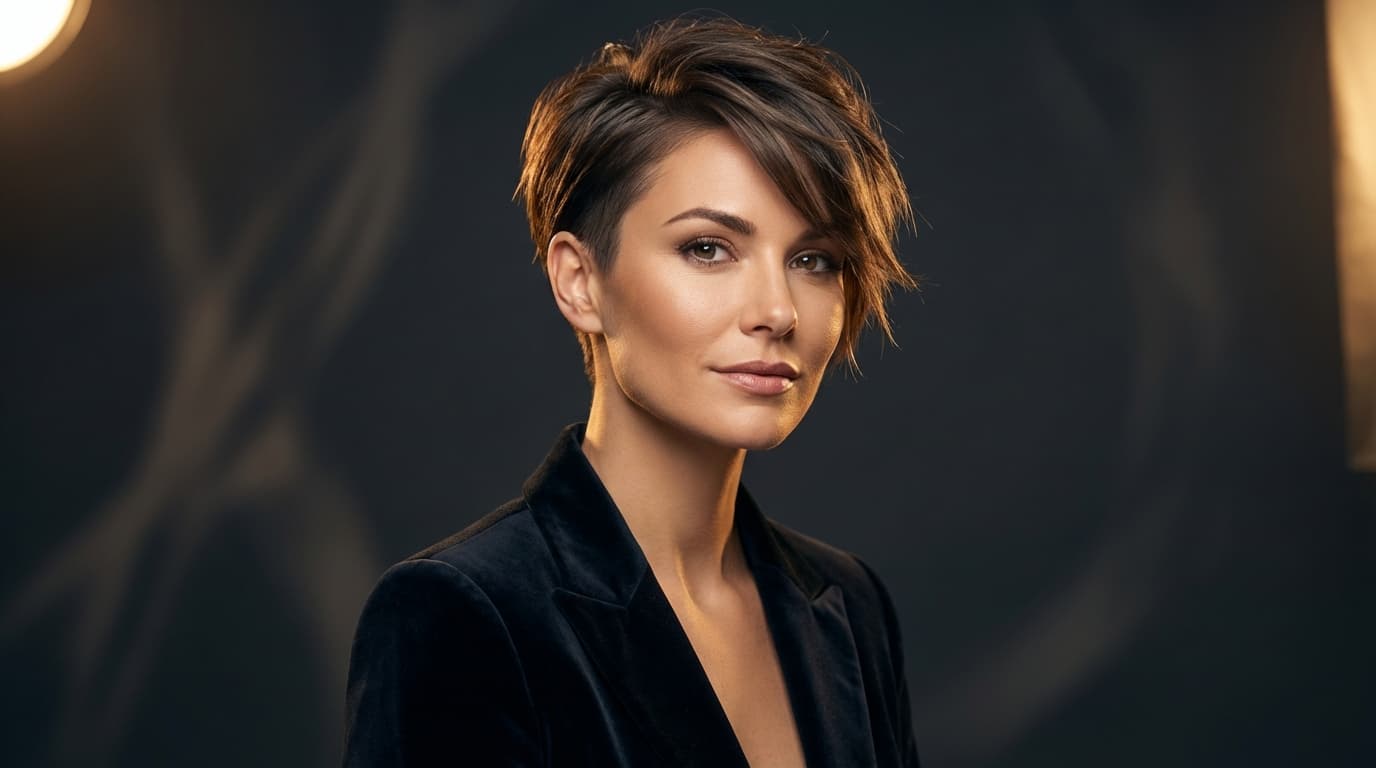
A pixie cut is one of the most transformative haircuts you can get. No other style changes the way people see you as dramatically, and no other style generates as much anxiety in the salon chair. You are removing inches of familiarity and exposing your face entirely. There is nowhere to hide.
That is also what makes it powerful.
When a pixie cut works, it sharpens your features, highlights your bone structure, and projects a confidence that longer hair simply cannot replicate. When it does not work, it can emphasize proportions you would rather downplay and leave you counting the months until it grows back.
This guide covers everything you need to know before making the cut: which pixie styles exist, how to match one to your face shape and hair texture, what to tell your stylist, how to style it daily, and how to grow it out gracefully when the time comes. If you are wondering what you would look like with short hair, this is the place to start.
What Is a Pixie Cut?
A pixie cut is a short hairstyle where the hair is cropped close to the head, typically with longer layers on top and shorter sides and back. The length on top ranges from one to three inches, while the sides and back can be tapered, faded, or left slightly longer depending on the variation.
The defining characteristics:
- Short overall length with the longest pieces rarely extending past the ears. This is what separates a pixie from a short bob or a long crop.
- Longer top, shorter sides creating contrast and shape. The top provides styling versatility while the short sides keep the silhouette clean.
- Exposed ears and neckline in most variations. The cut opens up the face fully, making facial features and bone structure the focal point.
- Face-framing through shape rather than curtains. Unlike layered cuts that use face-framing pieces to flatter, a pixie relies on its overall architecture and where volume is placed.
- Low to medium maintenance depending on the variation. Short pixies need frequent trims but minimal daily styling time. Longer pixies need more product but fewer salon visits.
The pixie has been a style statement since Audrey Hepburn made it iconic in the 1950s. In 2026, it remains one of the most requested short cuts, with modern variations that range from ultra-cropped to the longer bixie cut that blurs the line between pixie and bob. For a full look at what is trending this year, see our roundup of women's haircut trends 2026.
Types of Pixie Cuts
Not all pixie cuts are created equal. The variation you choose determines everything from daily styling time to how well it suits your face shape. Here are the four main categories.
Classic Pixie
Vibe: Clean, refined, timeless. Think Audrey Hepburn, Halle Berry, early Emma Watson.
Key features: Short sides and back with slightly longer layers on top, typically one to two inches. The cut follows the head shape closely. Minimal texture or layering. The silhouette is smooth and compact.
Best for: Oval and heart-shaped faces. People who want maximum impact with minimum daily effort. Those who are comfortable with a fully exposed face and neckline.
Maintenance: High in terms of salon visits (every 4-6 weeks to keep the shape), but very low in daily styling. A dab of pomade or wax and your fingers are all you need.
Modern Textured Pixie
Vibe: Effortless, current, editorial. Think Zoe Kravitz, Cara Delevingne in her pixie era.
Key features: More length and layering on top than a classic pixie, with pieces that can be styled in different directions for a tousled, lived-in look. The sides and back might be undercut or tapered. Texture is the star, not smoothness.
Best for: Nearly all face shapes because the texture and volume on top can be adjusted to flatter specific proportions. Works exceptionally well on wavy and curly hair.
Maintenance: Medium. Needs texturizing product and a few minutes of finger-styling or diffusing each morning. Trims every 5-7 weeks.
Asymmetrical Pixie
Vibe: Bold, artistic, fashion-forward. Think Rihanna circa 2012, early Miley Cyrus.
Key features: Dramatically different lengths on each side. One side might be buzzed or tightly cropped while the other has length that sweeps across the forehead or covers one eye. The asymmetry creates visual interest and draws the eye to specific features.
Best for: Round and square faces, where the diagonal line of asymmetry breaks up the symmetry of the face shape. Also great for anyone who wants a pixie with more styling versatility.
Maintenance: Medium to high. The asymmetrical shape grows out unevenly, so trims every 4-5 weeks are important. Daily styling requires directing the longer side into place.
Long Pixie (Bixie)
Vibe: Transitional, soft, approachable. Think the space between a pixie and a very short bob.
Key features: Longer than a traditional pixie, with the top reaching three to four inches and pieces that might cover the ears or graze the jawline. More length at the nape. Often includes side-swept bangs or curtain-like fringe. The silhouette is rounder and softer than a cropped pixie.
Best for: People who want the boldness of short hair without fully committing to a close crop. Excellent entry point if this is your first major chop. Works on all face shapes with proper customization.
Maintenance: Medium. More styling options but also more potential for awkward grow-out. Trims every 6-8 weeks.
Quick Comparison
| Feature | Classic Pixie | Textured Pixie | Asymmetrical Pixie | Long Pixie (Bixie) |
|---|---|---|---|---|
| Length on top | 1-2 inches | 2-3 inches | Varies dramatically | 3-4 inches |
| Sides/back | Short, tapered | Undercut or tapered | One side short, one longer | Slightly longer |
| Daily styling | 2 minutes | 5 minutes | 5-10 minutes | 5-10 minutes |
| Salon visits | Every 4-6 weeks | Every 5-7 weeks | Every 4-5 weeks | Every 6-8 weeks |
| Commitment level | High | Medium-high | High | Medium |
| Grow-out ease | Moderate | Good | Difficult | Easiest |
Best Pixie Cut by Face Shape
Face shape is the single most important factor in choosing a pixie variation. With longer hair, you can hide behind layers and length. With a pixie, your bone structure is fully on display, so the cut needs to work with your proportions, not against them.
If you are not sure of your face shape, our guide on the best hairstyle for your face shape walks you through identifying it, or you can upload a selfie to our AI tool for an instant analysis.
Pixie Cut for Oval Face -- Best Match
An oval face has balanced proportions with slightly wider cheekbones and a gently tapered chin and forehead. This is the most versatile face shape for a pixie because nearly every variation works.
Why it works: The balanced proportions mean a pixie will not throw anything out of alignment. The exposed bone structure looks harmonious from all angles. Oval faces can handle both close-cropped and longer pixie styles without any face shape concerns.
Best variations: Classic pixie, textured pixie, bixie. You have full creative freedom here.
What to watch for: The only risk is going so short and uniform that the cut looks generic rather than intentional. Add some texture or length variation on top to give it personality. For more ideas tailored to your shape, see our oval face style guide.
Pixie Cut for Round Face -- Requires Strategy
A round face has similar width and length, with full cheeks and a rounded jawline. The goal with a pixie on a round face is to create the illusion of length and angles.
Why it is tricky: A pixie removes the length that would otherwise elongate a round face. With hair cropped short, the fullness of the cheeks and the rounded jaw become the dominant features. A poorly chosen pixie can make a round face look wider and shorter than it is.
Best variations: Asymmetrical pixie (the diagonal line creates the angles that round faces lack), textured pixie with height on top (vertical volume elongates), or a long pixie with side-swept bangs (the sweep adds diagonal movement).
What to avoid: Do not go for a classic, close-cropped pixie with no volume on top. Avoid anything with equal length all around the head, which mirrors the roundness of the face. Skip blunt micro-bangs that cut across the forehead horizontally.
Key adjustments:
- Build height at the crown. Taller on top equals a visually longer face.
- Keep the sides tapered close. Volume at the sides adds width you do not want.
- Use a deep side part to break the face's symmetry.
- If you include bangs, make them side-swept, not straight across.
For the full roundup of short and long styles for this face shape, read our round face haircut guide.
Pixie Cut for Square Face -- Good Match
A square face has a strong jawline, broad forehead, and roughly equal width at the forehead, cheekbones, and jaw. The goal is to soften the angular features while highlighting the strong bone structure.
Why it works: A pixie actually plays well with square faces because the short hair showcases the strong jawline, which can look striking and model-like. The key is softening the overall effect so it does not look too severe.
Best variations: Textured pixie (the soft, tousled texture contrasts with angular features), long pixie with wispy bangs (the softness around the forehead breaks up the strong horizontal line), asymmetrical pixie (the diagonal line counteracts the boxiness).
What to avoid: Do not go for a uniform buzz-length cut that mirrors the square outline of the face. Avoid harsh geometric lines in the cut itself. Skip straight-across blunt bangs, which emphasize the broad forehead.
Key adjustments:
- Keep the top textured and soft rather than slicked or structured.
- Wispy, piece-y bangs soften the forehead without hiding it entirely.
- Slight volume at the crown helps elongate a square face.
- The nape area can be slightly longer and softer rather than tightly cropped.
Our square face style guide covers more options across all lengths.
Pixie Cut for Heart-Shaped Face -- Excellent Match
A heart-shaped face has a wider forehead and cheekbones that taper to a narrow, sometimes pointed chin. The goal is to balance the width up top with the narrowness at the bottom.
Why it works: A pixie on a heart-shaped face draws attention to the eyes and cheekbones, which are this face shape's strongest features. The short length does not compete with the delicate chin the way heavy, long hair sometimes can. The result is a refined, elfin quality that heart shapes are naturally suited for.
Best variations: Classic pixie (the original "pixie" look was practically designed for this face shape), long pixie with side-swept bangs (the bangs narrow the forehead width), textured pixie with volume at the temples (adds fullness near the chin level to balance).
What to avoid: Avoid excessive volume at the crown with no width at the sides, which exaggerates the inverted triangle shape. Skip very short, slicked-back styles that expose the full forehead width without any softening.
Key adjustments:
- Side-swept bangs or a long, angled fringe narrows the appearance of the forehead.
- Keep some texture or length at the sideburns and temple area to add visual width near the jawline.
- Soft, wispy ends are better than blunt, sharp lines.
For more options, check our heart-shaped face guide.
Face Shape Cheat Sheet
| Face Shape | Pixie Cut Rating | Best Variation | Key Adjustment |
|---|---|---|---|
| Oval | Excellent | Any variation works | Add texture for interest |
| Heart | Excellent | Classic or long pixie | Side-swept bangs to narrow forehead |
| Square | Good | Textured or asymmetrical | Soft texture, wispy bangs |
| Round | Requires strategy | Asymmetrical or textured with height | Volume on top, tapered sides, side part |
Styling a Pixie Cut by Hair Texture
Your hair texture determines which pixie variations are realistic and how much daily effort you will need. The same cut looks and behaves completely differently across textures.
Straight Hair
Straight hair gives a pixie its most polished, sculpted look. The cut lines are visible, the shape is precise, and the silhouette stays clean throughout the day.
Styling approach: Use a matte pomade or texturizing paste to create separation and movement. Without product, straight pixies can look flat or helmet-like. Work a small amount through damp hair, direct it where you want it, and let it air-dry or hit it with a blow-dryer for 60 seconds. The goal is definition without stiffness.
Watch out for: Straight hair shows every imperfection in the cut, so precision from your stylist is critical. Trims need to be more frequent.
Wavy Hair
Wavy hair might be the ideal texture for a pixie. The natural bend adds movement and body that straight hair has to fake, and the waves prevent the cut from ever looking too severe or sharp.
Styling approach: Embrace the texture. Apply a lightweight mousse or sea salt spray to damp hair, scrunch, and let it air-dry. Wavy pixies look best when they look effortless. Avoid over-brushing, which straightens out the waves and creates frizz.
Watch out for: Wavy hair can puff out at the sides as it grows, so you may need to taper the sides shorter than you think to maintain the shape between cuts.
Curly Hair
A curly pixie (sometimes called the "curly crop") is stunning when cut by someone who understands curl patterns. Curls add automatic volume and dimension that make a pixie look full and dynamic.
Styling approach: Always get the cut done dry. Curls shrink significantly when dry, and a wet cut will end up much shorter than intended. Use a leave-in conditioner, define curls with a curl cream, and diffuse or air-dry. Do not touch the curls while they dry.
Watch out for: You need a stylist who specializes in curly cuts. A straight-hair stylist cutting curly hair into a pixie is a recipe for uneven results. The layers need to be cut based on how curls fall naturally, not how the hair looks when stretched.
Thick Hair
Thick hair gives a pixie incredible body and fullness. The cut will hold its shape well and always look substantial rather than sparse.
Styling approach: Ask your stylist to use thinning shears or point-cutting to remove internal bulk without sacrificing the overall shape. Without bulk removal, thick pixies can look mushroom-like. Style with a lightweight cream or paste and blow-dry with your fingers for a natural shape.
Watch out for: Thick hair grows fast and a pixie on thick hair can lose its shape quickly. Budget for trims every 4-5 weeks.
Thin or Fine Hair
Contrary to popular belief, a pixie can be excellent for fine hair. Shorter lengths make fine hair look fuller because the hair does not get weighed down by its own length. A pixie can give the illusion of density that long, thin hair never achieves.
Styling approach: Ask for a textured pixie with piece-y layers rather than a smooth, close-cropped style. Blunt ends (not razored) make fine hair look thicker. Use a volumizing powder at the roots for lift. Avoid heavy products like wax or pomade, which weigh fine hair down and make it look greasy.
Watch out for: Keep the top slightly longer than you think you want it. Very short crops on fine hair can expose the scalp, which is not the goal.
What to Tell Your Stylist
Walking into a salon and saying "I want a pixie cut" is like walking into a restaurant and saying "I want food." You will get something, but it might not be what you had in mind. Be specific.
Say this:
- "I want a [classic / textured / asymmetrical / long] pixie. Here are photos that show the exact variation I mean."
- "I want [X inches] on top and [tapered / faded / slightly longer] on the sides and back."
- "I want [side-swept bangs / wispy fringe / no bangs]."
- "I want it to feel [polished / edgy / soft / bold]."
- "My face shape is [X], so I want to [add height on top / keep softness at the temples / avoid volume at the sides]."
Bring photos. At least three to five examples, ideally of people with similar hair texture and face shape. Point out specifically what you like in each photo: the length, the texture, the bang style, the neckline shape.
Mention what you want to avoid:
- "I do not want it to look masculine or uniform. I want texture and femininity."
- "I do not want it so short that I cannot style it in different directions."
- "I do not want heavy, blunt bangs." (Unless you do.)
Ask about the neckline: This is a detail most people forget. How the hair is shaped at the back of the neck changes the entire vibe. A tapered nape looks clean and polished. A slightly longer, textured nape looks softer and more feminine. An undercut nape looks modern and edgy. Tell your stylist which you prefer.
Not sure how a pixie will look on you? Try different haircuts with our AI tool before your appointment. Upload a selfie and preview the cut on your actual face. You will walk in knowing exactly what works for your proportions instead of hoping for the best.
Should You Get Bangs with a Pixie?
Bangs change the entire character of a pixie cut, and the right type of bangs can make a good pixie great.
Side-swept bangs are the most universally flattering option. They add movement, soften the forehead, and create a diagonal line that works with almost every face shape. They are particularly effective for round faces (adds asymmetry) and heart-shaped faces (narrows the forehead).
Micro bangs (very short, straight across) make a statement. They work best on oval and heart-shaped faces and give the cut an avant-garde, editorial edge. They are high-commitment and not forgiving if your face shape does not suit them.
Wispy, piece-y bangs sit somewhere between fringe and no fringe. They soften the forehead without fully covering it and add texture to the overall look. Great for square faces where you want to break up the horizontal line of the forehead without heavy bangs.
No bangs keeps the cut clean and open. This works best on oval faces and when you want the strongest, most sculpted look. It is also the easiest to maintain.
For a deep dive on whether bangs are right for your specific face shape and lifestyle, read our guide on should I get bangs.
Growing Out a Pixie Cut
Every pixie guide should be honest about this: the grow-out is the hard part. A pixie cut looks incredible for the first 3-4 weeks, then starts to lose its shape, and the process of growing it back to a bob or longer takes 6-12 months of varying degrees of awkwardness.
Here is how to survive it.
The Timeline
- Weeks 1-4: The honeymoon. Everything looks great.
- Weeks 5-8: The sides and back start getting shaggy. A maintenance trim (sides and back only, do not touch the top) resets things.
- Months 3-4: The mullet phase. The back grows faster than the top and sides. This is where most people give up and chop it back to a pixie. Resist. Get the nape trimmed to keep things balanced while letting the top and sides grow.
- Months 5-7: The awkward bob. Not quite short, not quite a bob. Headbands, clips, and texture spray are your best friends. This is when a long pixie or bixie shape starts to emerge.
- Months 8-12: You are in short bob territory. The worst is behind you. A stylist can shape what you have into a proper bob, and from here growing longer is straightforward.
Grow-Out Survival Tips
- Do not stop going to the salon. Growing out does not mean skipping cuts. Strategic trims every 6-8 weeks shape the growth and eliminate the mullet effect. Tell your stylist "I am growing this out" so they trim for shape, not length.
- Embrace texture products. Wax, pomade, sea salt spray, and texturizing powder become essential during the awkward phases. They give you control over pieces that are not long enough to fall naturally.
- Invest in hair accessories. Bobby pins, small clips, thin headbands, and scarves are not just decorative during grow-out, they are functional. They tame the sections that are at that impossible in-between length.
- Be patient with your part. During grow-out, experiment with different parts. As the hair gets longer, a new part line might suit the emerging shape better than the one you had with the pixie.
Pros and Cons of a Pixie Cut
Before you commit, an honest assessment.
Pros
- Time savings. A pixie cut takes 2-5 minutes to style daily. Blow-drying takes under a minute. Shampoo and conditioning are fast. You reclaim meaningful time every single morning.
- Confidence factor. There is something about drastically short hair that forces you to own your look. Most women who go pixie report feeling bolder, more defined, more themselves.
- Highlights your features. Cheekbones, jawline, eyes, neck, earrings. Everything that long hair covers, a pixie reveals. If you have strong features, a pixie amplifies them.
- Lower product costs. You use a fraction of the shampoo, conditioner, and styling products that longer hair requires.
- Cool in hot weather. Practical but real. A pixie in summer is a game-changer.
- Versatility within the category. Despite being short, a pixie can be styled in multiple directions: slicked back, tousled forward, side-swept, spiked up, smooth and polished. You have more options than people expect.
Cons
- Frequent salon visits. A pixie needs shaping every 4-6 weeks. Skip a trim and it starts looking grown-out rather than intentional. This adds up in cost and time.
- The grow-out commitment. If you decide you do not like it, you cannot just "go back." Growing out a pixie to a bob takes 6-12 months. You need to be at peace with that before cutting.
- Fewer bad-hair-day fixes. With long hair, a ponytail or bun solves everything. With a pixie, if it does not cooperate, your options are a hat or pushing through.
- Exposes everything. A pixie puts your face on full display. If you rely on hair to soften certain features or frame your face, you lose that tool entirely.
- Not universally flattering without customization. As the face shape section made clear, a pixie needs to be tailored to your proportions. A one-size-fits-all approach does not work.
Try Before You Cut
Cutting twelve or more inches of hair based on a photo of someone who looks nothing like you is a gamble. The face shape, the hair texture, the head shape, the neck length -- they all affect how a pixie looks, and they are all different on you than on the person in the inspiration photo.
Our AI hairstyle tool can help you compare haircut ideas on your photo. Upload a front-facing selfie, get face shape suggestions, and explore generated illustrations of a pixie or other styles.
The preview gives you a visual reference for discussing the cut with your stylist. Generation time varies.
See yourself with short hair before you cut.
Frequently Asked Questions
Is a pixie cut good for a round face?
It can be, but the variation matters enormously. A classic, close-cropped pixie with no volume on top will emphasize the roundness. Instead, go for a textured pixie with height at the crown, tapered sides, and a deep side part. Asymmetrical pixies also work well because the diagonal line creates angles that round faces lack. The goal is vertical emphasis and asymmetry. Avoid equal-length crops and straight-across bangs.
What face shape suits a pixie cut best?
Oval and heart-shaped faces are the most naturally suited for pixie cuts. Oval faces have balanced proportions that work with nearly every variation. Heart-shaped faces have the wide cheekbones and tapered chin that give pixie cuts their signature elfin quality. Square and round faces can also wear pixies well, but they require more specific customization to flatter the proportions. Read our full how to choose a hairstyle guide for a systematic approach.
How short is too short for a pixie?
That depends on your comfort level and your hair texture. A true pixie can go as short as half an inch on the sides and one inch on top (a "micro pixie"), but most people start with a longer variation -- two to three inches on top -- and go shorter over time as they get comfortable. Fine hair should generally stay on the longer end to avoid showing scalp. Curly hair should be cut longer than the target length because of shrinkage.
Will a pixie cut make me look older?
Not inherently. A well-cut, well-styled pixie looks modern and youthful. What can age you is a pixie that is too uniform, too helmet-like, or too "done." Texture, movement, and softness are the keys to a youthful pixie. Avoid stiff styling products, overly lacquered finishes, and cuts that sit too close to the head without any lift or dimension.
How often does a pixie cut need trimming?
Every 4-6 weeks for a short pixie, every 6-8 weeks for a longer bixie. A pixie loses its shape faster than any other cut because even a quarter inch of growth changes the proportions noticeably. If you are not willing to commit to regular trims, a pixie will look intentional for about a month and then look like a grow-out.
Can I curl or wave a pixie cut?
If you have at least two inches of length on top, yes. A mini curling iron (3/8 to 1/2 inch barrel) or a flat iron can create texture, bends, and waves on a pixie. Pin curls are another option for adding wave to shorter lengths. The result is a completely different look from the same cut -- tousled and romantic versus sharp and edgy. This is one of the underrated benefits of a longer pixie.
What is the difference between a pixie cut and a bob?
Length and coverage. A pixie cut keeps the hair above the ears and typically exposes the entire ear, neckline, and most of the forehead. A bob covers the ears and reaches at least the jawline. The "bixie" (long pixie) sits in between, with pieces that might reach or cover the ears but do not extend to the jaw. A pixie is a fundamentally short cut; a bob is a fundamentally medium cut. If you are debating between the two, the bixie gives you a taste of both. For another edgy option in the medium-length space, check out our wolf cut guide.
How do I know if a pixie cut will suit me before I cut my hair?
Discuss your hair texture, density, and styling routine with a stylist. An AI preview can also help you compare the outline on your photo. Our AI hairstyle tool lets you upload a selfie, identifies your face shape, and generates realistic previews of how a pixie and other short styles would look on you. It is not a filter or an overlay -- it generates a new image based on your features. Use the image to discuss length and shape with your stylist; the result is an illustration, not a prediction of how your own hair will behave.
Related Guides
- Best Hairstyle for Your Face Shape -- find your face shape first
- What Would I Look Like with Short Hair? -- preview short cuts on yourself
- Best Haircuts for Round Faces -- full round face guide
- Best Hairstyles for Oval Faces
- Best Hairstyles for Heart-Shaped Faces
- Best Hairstyles for Square Faces
- Should I Get Bangs? -- bang styles and face shape compatibility
- How to Choose a Hairstyle -- the systematic decision method
- Wolf Cut Guide -- another trending layered style
- Women's Haircut Trends 2026 -- what is trending right now
Final Thoughts
A pixie cut is not just a haircut. It is a decision that reshapes how you present yourself to the world. Done right, with the correct variation for your face shape and hair texture, it is one of the most striking and low-maintenance styles you can wear.
The key is preparation. Know your face shape. Understand which variation suits your proportions. Bring specific references to your stylist. And if you are on the fence, see it on yourself first before you sit in the chair. A few seconds of AI preview can give you the clarity that months of Pinterest scrolling cannot.
Choose a Look for Your Next Appointment
Upload your selfie to see a suggested haircut on your face. Compare the shape before discussing the details with your barber.
Try Your New Haircut Now