Should I Get Bangs? Honest Guide by Face Shape (Don't Regret It)
Jump to a section
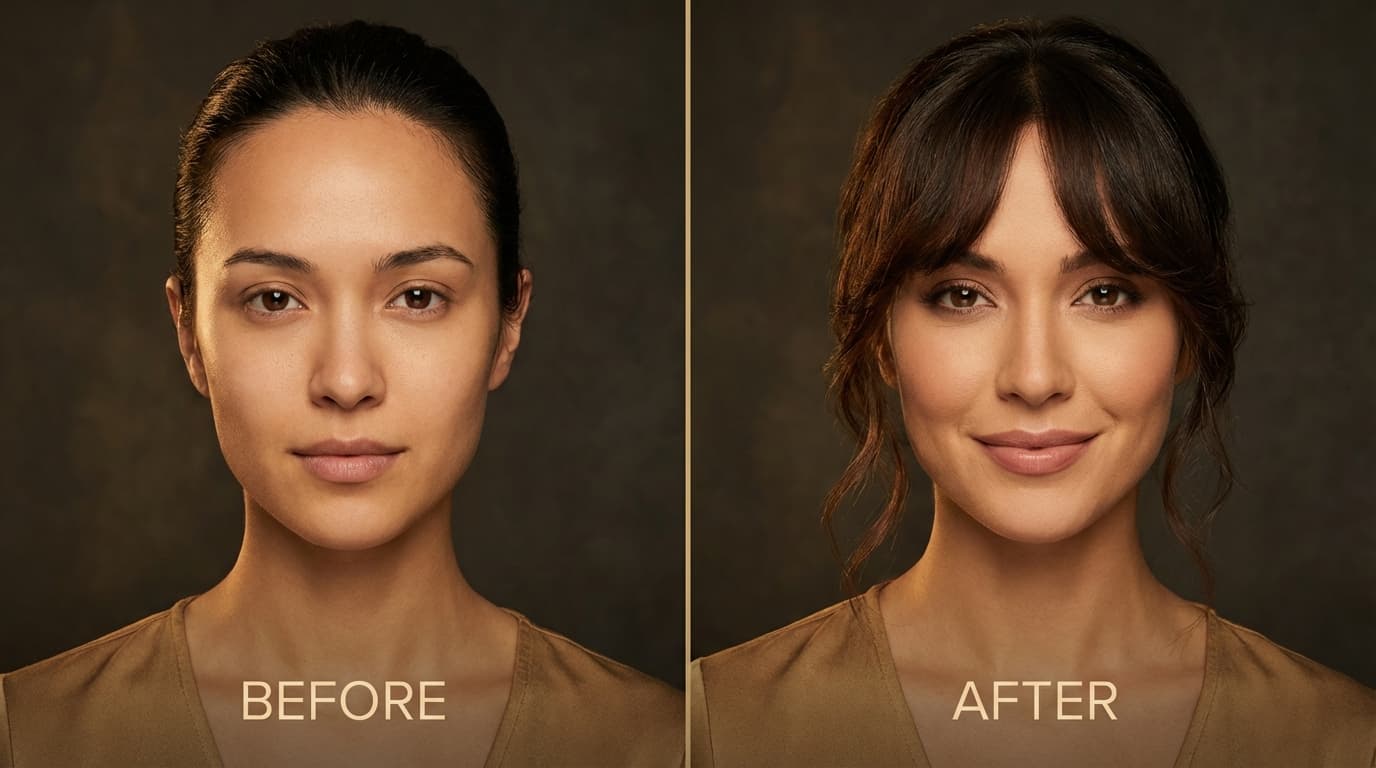
The Bangs Dilemma
Few hair decisions carry as much weight as getting bangs. You can undo a bad color in a single salon visit. A cut that is too short grows back in a few weeks. But bangs? Bangs change the entire architecture of your face the moment they are cut, and if you hate them, you are looking at six to nine months of awkward growing-out stages, headbands, and bobby pins.
That is why "should I get bangs" is one of the most agonized-over hair questions on the internet. The stakes feel disproportionately high for something that technically involves just a few inches of hair. Bangs frame your eyes, alter the perceived shape of your face, and shift your entire look from casual to polished or from classic to edgy depending on the style you choose.
The anxiety is real, but it does not have to be paralyzing. The key is understanding which type of bangs suits your face shape, hair texture, and lifestyle - and ideally, seeing them on your actual face before you sit in the salon chair. This guide covers all of that.
Types of Bangs Explained
Not all bangs are created equal. The word "bangs" covers a wide spectrum of styles, and choosing the right type matters just as much as deciding to get them in the first place. Here are the major categories you should know about.
Curtain Bangs
Curtain bangs are the most popular and forgiving style right now, and for good reason. They part in the center (or slightly off-center) and sweep outward on both sides, framing your face like - yes - curtains. The longest pieces typically fall around cheekbone to jaw length, blending seamlessly into the rest of your hair.
Why people love them: Curtain bangs are the lowest-risk entry point into the bangs world. They grow out gracefully, work with almost every face shape, and can be styled swept back on days you want them out of your face. They also do not require the precise, frequent trims that blunt bangs demand.
Best for: Anyone who wants to ease into bangs without full commitment. They are especially flattering on round and square faces because the face-framing layers create a slimming vertical line.
Side-Swept Bangs
Side-swept bangs are cut at an angle and brushed to one side of the forehead. They can range from a subtle, barely-there sweep to a dramatic diagonal that covers one eye. This is one of the most classic and universally flattering bang styles.
Why people love them: Side-swept bangs add softness and asymmetry to your face without the full-forehead commitment of straight-across styles. They are easy to style - a quick blow-dry with a round brush in one direction is usually all you need - and they transition well as they grow out.
Best for: Heart-shaped and square faces benefit most from the diagonal line, which softens a strong jawline or a wider forehead. But honestly, side-swept bangs work on almost everyone.
Wispy and Feathery Bangs
Wispy bangs are thin, delicate, and intentionally see-through. Rather than a solid curtain of hair across your forehead, you get soft, separated pieces that let your skin peek through. Feathery bangs are a close cousin - slightly longer and more textured, with movement that feels effortless.
Why people love them: They are the lightest commitment you can make in the bangs department. Because the fringe is thin and airy, it does not dramatically alter your face the way blunt bangs do. If you decide you hate them, the growing-out phase is far less painful since they already look intentionally undone.
Best for: Fine or thin hair actually shines with wispy bangs because the style is designed to look delicate. They are also a smart choice for anyone with a smaller forehead, since a heavy fringe would make the face feel closed-in.
Blunt and Straight-Across Bangs
This is the bold, statement-making choice. Blunt bangs are cut in a straight horizontal line across the forehead, usually landing just above the eyebrows or right at the brow line. They are thick, full, and unmistakably intentional.
Why people love them: Blunt bangs are striking. They create a strong frame around the eyes and give an immediate "I have a great hairstylist" energy. Think Zooey Deschanel, Taylor Swift in her 1989 era, or classic French girl hair.
Best for: Oval and oblong face shapes are the ideal candidates. Blunt bangs visually shorten a long face by cutting across the forehead horizontally, creating better proportion. If your face is round or square, blunt bangs can make it appear wider, so proceed with caution.
The catch: Blunt bangs are high-maintenance. They need trimming every three to four weeks to stay sharp, and they require daily styling - usually a flat iron or blow-dry - to avoid a lumpy, uneven look. Humidity is their enemy.
Micro and Baby Bangs
Micro bangs (also called baby bangs) sit well above the eyebrows, sometimes as high as the middle of the forehead. They are deliberately short, deliberately bold, and definitely not for the faint of heart.
Why people love them: Micro bangs are a fashion statement. They have an edgy, editorial quality that works well with pixie cuts, bobs, and other strong, defined hairstyles. They draw attention directly to your eyes and brows.
Best for: Oval faces handle micro bangs the most naturally because the proportions stay balanced even with the forehead exposed. If you have a naturally small forehead, micro bangs can actually work in your favor by creating the illusion of more space above the brow. People with larger foreheads should think carefully, since micro bangs expose a lot of forehead real estate.
Bottleneck Bangs
Bottleneck bangs are one of the hottest trends going into 2026. They are a hybrid between curtain bangs and traditional bangs - shorter and fuller in the center of the forehead, then tapering out into longer face-framing pieces on the sides. The name comes from the shape resembling the neck of a bottle.
Why people love them: They combine the face-framing benefits of curtain bangs with the impact of a true fringe. You get more forehead coverage than curtain bangs alone, but the tapered sides prevent the heaviness of blunt bangs. They are fresh, modern, and photograph extremely well.
Best for: Bottleneck bangs are particularly flattering on oval, heart, and diamond face shapes. The shorter center section creates width across the forehead, while the longer sides slim the cheeks.
Best Bangs for Your Face Shape
Choosing bangs based on your face shape is the single biggest factor in whether you will love or regret them. If you are not sure about your face shape, check out our full guide on what haircut you should get, which includes a step-by-step method for identifying your shape.
Oval Face
You hit the bangs jackpot. Oval faces are proportionally balanced, which means nearly every type of bangs works. Blunt bangs, curtain bangs, wispy bangs, micro bangs - you can experiment freely.
- Top picks: Blunt bangs for a dramatic look, curtain bangs for an effortless vibe
- Avoid: Extremely long, heavy bangs that cover your eyebrows entirely can make an oval face appear shorter than it is
Round Face
The goal is to add length and angles. You want bangs that create vertical lines rather than horizontal ones, and that do not add width to the widest part of your face.
- Top picks: Long side-swept bangs, curtain bangs, and wispy bangs that are longer at the sides
- Avoid: Short, blunt straight-across bangs - they add a horizontal line at the widest point and can make a round face look wider and shorter
Square Face
Square faces have a strong jawline and forehead that are approximately the same width. The right bangs can soften those angles and add a sense of flow.
- Top picks: Side-swept bangs, curtain bangs, and wispy bangs all add softness. The key is creating diagonal or curved lines that counteract the angular bone structure
- Avoid: Blunt, straight-across bangs that mirror the strong horizontal line of your jaw - they can make a square face feel boxy
Heart Face
Heart-shaped faces are wider at the forehead and taper to a narrow, sometimes pointed chin. Bangs can balance this by minimizing the forehead width.
- Top picks: Side-swept bangs, curtain bangs, and bottleneck bangs are ideal. They soften the wider forehead without drawing attention away from your cheekbones, which are usually a heart-shape's best feature
- Avoid: Micro bangs - they expose the widest part of your face and can exaggerate the forehead-to-chin imbalance
Diamond Face
Diamond faces are widest at the cheekbones with a narrower forehead and jawline. Bangs can add width to the forehead to create balance with the cheeks.
- Top picks: Wispy bangs, bottleneck bangs, or side-swept bangs that add volume around the forehead. Curtain bangs work too, especially if they are not too long - you want them to add width at the top, not at the cheekbones
- Avoid: Very long curtain bangs that flare out at cheekbone level, which would only emphasize the widest part of your face
Oblong Face
Oblong (or rectangular) faces are longer than they are wide with a forehead, cheekbones, and jawline that are roughly similar in width. Bangs are actually one of the best tools for this face shape because they visually shorten the face.
- Top picks: Blunt bangs are your superpower - they cut across the forehead and immediately create the illusion of a shorter, more proportional face. Thick curtain bangs and bottleneck bangs also work well
- Avoid: Very short or micro bangs, which would expose forehead length and make your face appear even longer
For a deeper dive into matching hairstyles to your face, see our guide on the best hairstyle for your face shape.
Bangs + Face Shape Quick Reference
| Face Shape | Best Bangs | Avoid | Why |
|---|---|---|---|
| Oval | Any style works | Heavy blunt bangs | Don't hide balanced proportions |
| Round | Side-swept, curtain | Straight-across blunt | Blunt bangs widen the face |
| Square | Wispy, curtain, side-swept | Micro bangs, blunt | Soft bangs offset angular jaw |
| Heart | Curtain, wispy, bottleneck | Short/micro bangs | Longer bangs balance narrow chin |
| Diamond | Curtain, side-swept | Blunt, heavy bangs | Frame narrow forehead gently |
| Oblong | Blunt, curtain, full bangs | Wispy (too thin) | Bangs visually shorten the face |
Hair Texture Considerations
Your face shape tells you which bangs to get. Your hair texture tells you what to realistically expect once you have them.
Straight Hair
Straight hair is the easiest texture for bangs. They lay flat, behave predictably, and require minimal styling. Blunt bangs look the sharpest on straight hair because every strand falls in line. The downside is that straight hair shows oil quickly, and greasy bangs are not a good look - you may need to wash your fringe more frequently than the rest of your hair.
Wavy Hair
Wavy hair adds natural movement and body to bangs, which can look gorgeous - think effortless curtain bangs with a soft bend. The challenge is that waves are unpredictable. Your bangs might curl differently on humid days or after sleeping on them. Curtain bangs and wispy bangs are the safest bets because their looser structure accommodates wave variation. Avoid blunt bangs unless you are willing to flat-iron them daily.
Curly Hair
Curly bangs can look incredible, but they require a stylist who understands curl shrinkage. Hair that looks like it falls at your eyebrows when wet might bounce up to your mid-forehead when dry. Wispy bangs and curtain bangs tend to work best because they give curls room to move. Always ask for your bangs to be cut dry - no exceptions.
Thick Hair
Thick hair produces full, voluminous bangs, which is great for curtain and blunt styles but can feel heavy and helmet-like if not properly thinned. Ask your stylist to use thinning shears or point-cutting to remove bulk from the interior of the fringe while keeping the outline clean.
Thin or Fine Hair
Thin hair means fewer strands to work with, so heavy blunt bangs are usually off the table - there simply is not enough hair to create that thick, solid-line effect. Wispy bangs, side-swept bangs, and light curtain bangs are your best friends. These styles are designed to look airy and work with the natural delicacy of fine hair rather than against it.
Practical Considerations Before Getting Bangs
Bangs are not just a haircut - they are a lifestyle change. Here is what nobody tells you before you commit.
Maintenance Schedule
Most bang styles need a trim every three to six weeks depending on how fast your hair grows and how precise the cut needs to be. Blunt bangs are on the shorter end of that range. Curtain bangs and wispy styles are more forgiving and can stretch to six or even eight weeks between trims. Some people learn to trim their own bangs at home, but proceed cautiously - kitchen-scissors bangs are a well-known regret.
Daily Styling Time
Factor in an extra two to ten minutes to your morning routine. Some styles, like wispy or curtain bangs, might only need a quick tousle with your fingers and some dry shampoo. Blunt bangs often require a blow-dry or flat iron every single morning to avoid bumps and kinks from sleeping. If you are someone who rolls out of bed and heads out the door, choose a low-maintenance style.
The Growing-Out Phase
This is the part most people dread, and it is the number one reason people hesitate to get bangs. Growing out bangs takes anywhere from four to nine months depending on the starting length and your target style. The awkward in-between phase - too long to be bangs, too short to tuck behind your ears - is real, and it requires patience and creative styling with clips, headbands, and braids.
Lifestyle Factors
Think about your daily life. Do you work out frequently? Sweaty bangs stick to your forehead. Do you live in a humid climate? Expect extra frizz and curl. Do you wear glasses? Make sure your bangs do not interfere with the frames. Do you have oily skin? Your forehead oil will transfer to your bangs faster than you think. None of these are dealbreakers, but they are worth factoring into your decision.
How AI Solves the Bangs Problem
Here is the truth: most bangs regret comes from a gap between imagination and reality. You picture yourself with gorgeous curtain bangs like the ones you saved on Pinterest, but your actual face, hair texture, and proportions are different from the model in that photo. The result? Disappointment, frustration, and a months-long grow-out.
This is exactly the problem that virtual try-on technology was built to solve. Instead of guessing, wondering, or relying on your hairstylist's verbal description, you can see what bangs look like on your actual face before a single strand is cut.
With AI-powered tools like ours, you upload a photo (or take one on the spot), select the bang style you want to preview, and get a realistic rendering of how that style looks with your specific face shape, skin tone, and features. You can try curtain bangs, then switch to blunt bangs, then test wispy bangs - all in under a minute. Compare them side by side. Send them to your friends for opinions. Show the result to your stylist so they know exactly what you want.
It is the difference between a leap of faith and an informed decision. Try different bang styles on your photo now and take the anxiety out of the equation entirely.
Related Reading
- What Haircut Should I Get? — complete decision guide
- Best Hairstyle for Your Face Shape — know your shape first
- Best Hairstyles for Oval Faces
- Best Haircuts for Round Faces
- Best Hairstyles for Square Faces
- Best Hairstyles for Heart-Shaped Faces
- Best Hairstyles for Oblong Faces
- Best Hairstyles for Thin Hair
- What Would I Look Like With Short Hair?
- Men's Hairstyle Trends 2026
- Women's Haircut Trends 2026
- Butterfly Cut Guide — often paired with bangs
- Hair Transformation Ideas — planning a bigger change?
- How to Choose a Hairstyle — the systematic method
- Wolf Cut Guide — the trending layered mullet hybrid
- Pixie Cut Guide — pixie styles for every face shape
- Layered Haircut Guide — layers explained by face shape
Frequently Asked Questions
Will bangs make me look younger?
In many cases, yes. Bangs cover forehead lines and wrinkles, frame the eyes, and draw attention to the middle of the face - all of which can create a more youthful appearance. Wispy bangs and curtain bangs tend to have the strongest "youthful" effect because they soften the face without looking too heavy. That said, the effect depends heavily on your face shape and the style you choose. Blunt, heavy bangs on the wrong face shape can actually add visual weight rather than take years off.
How do I know if my forehead is the right size for bangs?
There is no "wrong" forehead size for bangs - but the size does influence which style works best. A larger forehead (anything above roughly three finger-widths between your brows and hairline) benefits from bangs because they create proportion and balance. A smaller forehead works best with wispy or side-swept bangs that do not overwhelm the limited space. If you are unsure, upload your photo and try a few styles to see what looks natural.
Can I get bangs if I have curly hair?
Absolutely. Curly bangs are beautiful and can add a lot of personality to your look. The most important thing is finding a stylist experienced with cutting curly hair and having the bangs cut dry so you can see the true length with natural curl shrinkage. Wispy and curtain styles work especially well with curls because they allow natural movement without fighting the curl pattern.
How long does it take to grow out bangs?
Plan for four to nine months depending on how short your bangs are and how fast your hair grows (average hair growth is about half an inch per month). The most awkward phase is typically months two through four, when your bangs are too long to lay flat but too short to tuck behind your ears. During this time, headbands, clips, and braiding them into your part line are your best tools. The good news is that curtain bangs and side-swept styles have a much easier grow-out than blunt bangs, since they naturally blend into the rest of your hair as they lengthen.
Should I get bangs in summer or winter?
There is no perfect season, but there are trade-offs. Getting bangs in fall or winter means less humidity (so easier styling) and more time to grow them out before summer if you decide they are not for you. Getting them in summer means dealing with sweat and humidity, but also means you can wear them with more casual, undone styling. If you tend to sweat a lot or live in a very humid area, starting in cooler months gives you time to build a styling routine before summer hits.
Choose a Look for Your Next Appointment
Upload your selfie to see a suggested haircut on your face. Compare the shape before discussing the details with your barber.
Try Your New Haircut Now