Bixie Cut Guide: Face Shapes, Hair Types & Styling (2026)
Jump to a section
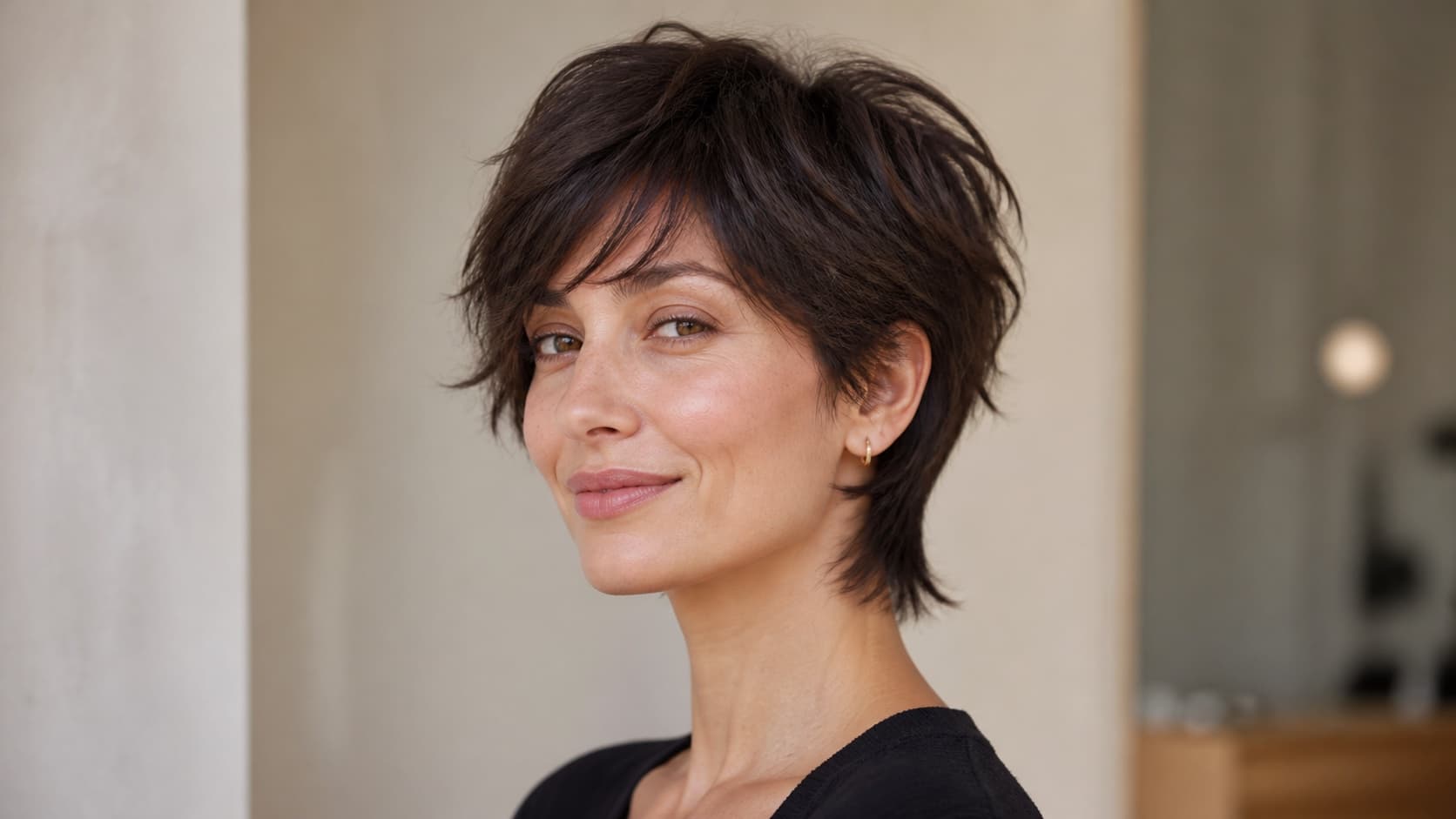
What Is a Bixie Cut?
A bixie cut is a short, layered haircut that sits between a bob and a pixie. It keeps the cropped shape and exposed neckline of a pixie, but leaves more length around the crown, ears, fringe, and nape. The result is softer than a classic pixie and lighter, choppier, and shorter than most bobs.
The easiest way to recognize a bixie is by its deliberately in-between silhouette. The top has enough length to create volume or a side part. Pieces around the ears can be tucked back or left loose. The nape is usually tapered but not clipped close, and the ends are layered rather than forming the solid perimeter of a bob.
That flexibility is why the bixie has become one of 2026's most talked-about short cuts. It offers a real transformation without removing every styling option, and it works particularly well for people who want more volume, movement, or a graceful route from a pixie into a bob.
Why the Bixie Is Trending in 2026
The bixie fits several changes happening in hair at the same time.
Short hair is becoming softer. Precise, glassy bobs are still around, but the broader direction is toward movement, natural texture, and cuts that do not need to look perfect. A bixie is built from layers and separation, so a slightly undone finish looks intentional.
The 1990s influence is back. The bixie has the cropped crown, flicked ends, wispy fringe, and visible ears associated with 1990s short hair. The 2026 version is less helmet-like, with lighter internal layers and more respect for the wearer's natural texture.
It is a lower-risk major chop. Going from long hair to a close pixie can feel extreme. A bixie keeps enough length to frame the face, tuck behind the ears, change the part, or add small accessories. It still looks dramatically shorter, but it gives you more ways to adjust the result.
It solves the awkward grow-out stage. If you already have a pixie, the bixie turns the in-between phase into an actual haircut. Instead of repeatedly cutting the back short, your stylist can connect the growing top, sides, and nape into a deliberate layered shape.
Bixie vs Pixie vs Bob
The names overlap, so focus on shape rather than the label.
| Feature | Bixie | Pixie | Bob |
|---|---|---|---|
| Typical length | Ear to upper-nape length | Cropped close around sides and nape | Usually chin to shoulder length |
| Shape | Layered, airy, deliberately irregular | Compact and close to the head | Stronger perimeter with more weight |
| Fringe | Often wispy, side-swept, or curtain-like | Optional and usually shorter | Optional, with more length to blend into |
| Styling options | Part, tuck, tousle, slick back | Texture or direction on top | Straight, waved, tucked, or tied at longer lengths |
| Trim schedule | Roughly every 5-8 weeks | Roughly every 4-6 weeks | Roughly every 6-10 weeks |
| Commitment | Medium | High | Low to medium |
Choose a bixie if you want short hair with visible movement and some face-framing length. Choose a pixie cut if you want a cleaner, more exposed crop with minimal hair around the ears and nape. Choose a bob if you want a stronger outline, more weight at the ends, and enough length to keep the overall shape feeling polished.
Best Bixie Cut for Each Face Shape
A bixie can be adjusted more easily than a close pixie because the stylist has extra length to place around the face. The important question is where to keep volume and where to remove it.
Oval Face
Oval faces can wear almost every bixie variation. A balanced face does not need corrective volume, so you can choose based on texture and personality: sleek and tucked, soft and feathered, or choppy with a longer fringe.
Ask for: A classic layered bixie with the length you like around the ears and nape.
Watch for: Too much uniform volume can hide your natural proportions. Keep some separation between layers so the cut still has shape.
Round Face
A bixie can work very well on a round face when it creates height and diagonal movement. The wrong version -- wide at the cheeks with a short horizontal fringe -- can make the face look rounder.
Ask for: Crown volume, a deep side part or side-swept fringe, tapered weight around the cheeks, and slightly longer pieces near the jaw or nape.
Avoid: A rounded bowl silhouette, blunt baby bangs, or maximum width directly beside the cheeks. See more options in our round face haircut guide.
Square Face
The softness of a bixie is useful against a strong jaw and broad forehead. Wispy ends, curved side pieces, and natural waves break up straight horizontal lines.
Ask for: Feathered texture, a loose fringe, and a nape that stays soft rather than sharply undercut.
Avoid: A boxy perimeter or blunt fringe that repeats the width of the forehead.
Heart-Shaped Face
Heart-shaped faces are a natural match for the bixie. Longer pieces around the ears and lower sides can balance a wider forehead and a narrower chin, while fringe draws attention to the eyes and cheekbones.
Ask for: Side-swept or wispy bangs, some fullness near the ears, and a softly tapered crown.
Avoid: Extreme height at the crown with very tight sides, which can exaggerate the difference between the forehead and chin.
Oblong Face
An oblong face benefits from width rather than height. The extra side length of a bixie makes it safer than a tall, close-sided pixie.
Ask for: Fullness around the temples and ears, a fringe that covers part of the forehead, and moderate rather than dramatic crown lift.
Avoid: A high quiff, very short sides, or a slicked-back shape that exposes the full forehead and adds more vertical length.
Bixie Cuts by Hair Type
Your natural texture affects both the final silhouette and the amount of work required every morning.
Fine or Thin Hair
The bixie is one of the strongest short-cut options for fine hair. Removing length stops the hair from being pulled flat, while short internal layers create lift at the crown. The ends need to retain enough density, though; aggressive razor cutting can make already-fine hair look sparse.
Best approach: Blunt or point-cut ends, light crown layering, and volumizing mousse or root spray. Ask the stylist to preserve weight around the perimeter instead of thinning every section.
Thick Hair
Thick hair gives a bixie shape and body, but uncontrolled bulk can turn it into a mushroom. The stylist needs to remove weight internally while keeping the visible ends soft and intentional.
Best approach: Strategic internal layers, a tapered nape, and selective texturizing underneath the heaviest areas. Avoid thinning the outer surface so aggressively that short pieces stick up.
Straight Hair
Straight hair shows the architecture of the cut clearly. It is ideal for a sleek, ear-tucked bixie or a precise side part, but it can sit flat without some crown layering.
Best approach: A lightweight texture spray, small round brush at the roots, and a pea-sized amount of paste through the ends.
Wavy Hair
Natural waves are close to the ideal bixie texture. They create movement without needing a curling iron and make the grow-out more forgiving.
Best approach: Air-dry with a light curl cream or mousse, then separate a few pieces with your fingers. Ask the stylist to cut with your dry wave pattern in mind.
Curly Hair
A curly bixie has a rounded, lively crown with curls framing the forehead, ears, and nape. It can look fuller than a straight bixie at the same length, so shrinkage and weight distribution matter more than the measurement in inches.

Best approach: Choose a stylist who cuts curls in their natural state. Keep enough length around the front and nape for the curls to form complete shapes, and use leave-in conditioner plus a light gel rather than heavy wax.
Six Bixie Variations to Consider
Soft Layered Bixie
Feathered layers, a wispy fringe, and a gently tapered nape make this the easiest version to wear. It suits first-time short-hair clients and grows out smoothly.
Choppy Bixie
Shorter, separated layers create an edgier texture with more visible movement. This works best on straight to wavy hair and needs a small amount of matte paste to keep the pieces defined.
Curly Bixie
The shape follows the natural curl pattern, with controlled volume at the crown and longer curls around the ears and nape. The result should look soft rather than triangular.
Bixie with Bangs
Wispy or side-swept bangs blend easily into the layered top. A heavier straight fringe creates a stronger 1990s look but requires more frequent trimming and is less forgiving on round or square faces.
Sleek Side-Part Bixie
A deep part and ear-tucked sides turn the bixie into a cleaner, more polished cut. This version works especially well on straight hair and makes the cheekbones more visible.
Long Bixie
The long bixie keeps pieces closer to jaw length, more coverage around the ears, and a fuller nape. It is the safest option when you want to go short without feeling exposed, or when you are growing a pixie into a bob.
What to Ask Your Stylist For
Do not rely on the word "bixie" alone. Different stylists may picture different lengths. Bring reference photos that show the front, side, and back, ideally on hair with a similar texture to yours.
Use a request like this:
I want a layered bixie that sits between a pixie and a short bob. Keep enough length around my ears to tuck it back, leave soft movement at the nape, and build light volume at the crown. I want a wispy, side-swept fringe and separated ends, not a blunt bob line or a close-cropped pixie.
Then clarify these five choices:
- Ear coverage: Fully exposed, partly covered, or long enough to tuck?
- Nape: Cleanly tapered, softly feathered, or deliberately longer?
- Fringe: None, side-swept, wispy, curtain-like, or blunt?
- Finish: Sleek, soft, choppy, or natural and curly?
- Daily effort: Air-dry friendly, or are you happy to blow-dry and use product?
Maintenance: The Honest Version
A bixie is not necessarily wash-and-go. It uses less product and dries faster than long hair, but short layers can react strongly to cowlicks, humidity, and sleeping position.
Plan for a trim every five to eight weeks. A shorter, more structured version will need the earlier end of that range. A soft long bixie can often stretch closer to eight weeks because growth simply moves it toward a bob.
Morning styling usually takes three to ten minutes:
- Wet or mist any sections that dried in the wrong direction.
- Add mousse or root spray if you need crown lift.
- Blow-dry with fingers or a small brush, directing the fringe first.
- Finish with a tiny amount of cream or paste on the ends.
The main risks are a bulky crown on thick hair, a flat top on fine straight hair, and an unplanned mullet shape as the nape grows. All three are manageable when the initial cut is designed for your texture and your stylist explains what should be trimmed at the next visit.
Should You Get a Bixie Cut?
A bixie is a strong choice if you want a visible change, like short hair but still want face-framing pieces, or need more lift than your current length provides. It is also one of the easiest intentional shapes for growing out a pixie.
Think twice if you strongly dislike frequent salon visits, need to tie all your hair back for work or sport, or know you will not spend even a few minutes resetting short layers in the morning. In that case, a chin-length bob or long bob may give you a better balance of movement and flexibility.
The biggest uncertainty is not whether the bixie looks good in a reference photo. It is whether the same placement of volume, fringe, and side length works with your own face and hairline. Preview a bixie on your own selfie before the appointment so you can compare it with a pixie, bob, and longer layered options.
Frequently Asked Questions
Is a bixie cut good for fine hair?
Yes. A bixie can make fine hair look fuller because the shorter length removes weight and crown layers create lift. Ask for blunt or point-cut ends and restrained internal layering. Excessive razor cutting or thinning can remove too much density.
Does a bixie work on a round face?
Yes, when the shape adds height at the crown and diagonal movement through a side part or side-swept fringe. Keep the sides lighter around the fullest part of the cheeks and avoid a wide, rounded bowl shape.
What is the difference between a bixie and a pixie cut?
A bixie is longer and softer. It usually retains hair around the ears, more length at the nape, and enough top length to part or tuck. A pixie is more closely cropped at the sides and back and exposes more of the face and neckline.
How often does a bixie need to be cut?
Most bixie cuts need reshaping every five to eight weeks. Short, precise versions need more frequent trims, while soft long bixies can grow toward a bob without immediately losing their shape.
Can curly hair wear a bixie?
Yes. Curly hair gives a bixie natural volume and movement, but the stylist must account for shrinkage and cut according to the dry curl pattern. Keep enough length for complete curls to form around the fringe, ears, and nape.
Is a bixie easy to grow out?
It is easier to grow out than a close pixie because it already contains bob-like length around the sides and nape. Regularly balancing the back with the growing top helps it transition into a short bob without a severe awkward phase.
Related Guides
- Pixie Cut Guide -- compare the bixie with a shorter crop
- What Would I Look Like With Short Hair? -- plan a major chop
- Should I Get Bangs? -- choose the right fringe
- Women's Haircut Trends 2026 -- see the wider trend picture
- Best Hairstyles for Thin Hair -- volume-friendly options
- Best Hairstyle for Your Face Shape -- identify the proportions your cut should balance
Choose a Look for Your Next Appointment
Upload your selfie to see a suggested haircut on your face. Compare the shape before discussing the details with your barber.
Try Your New Haircut Now